.svg)

.svg)
%201.svg)


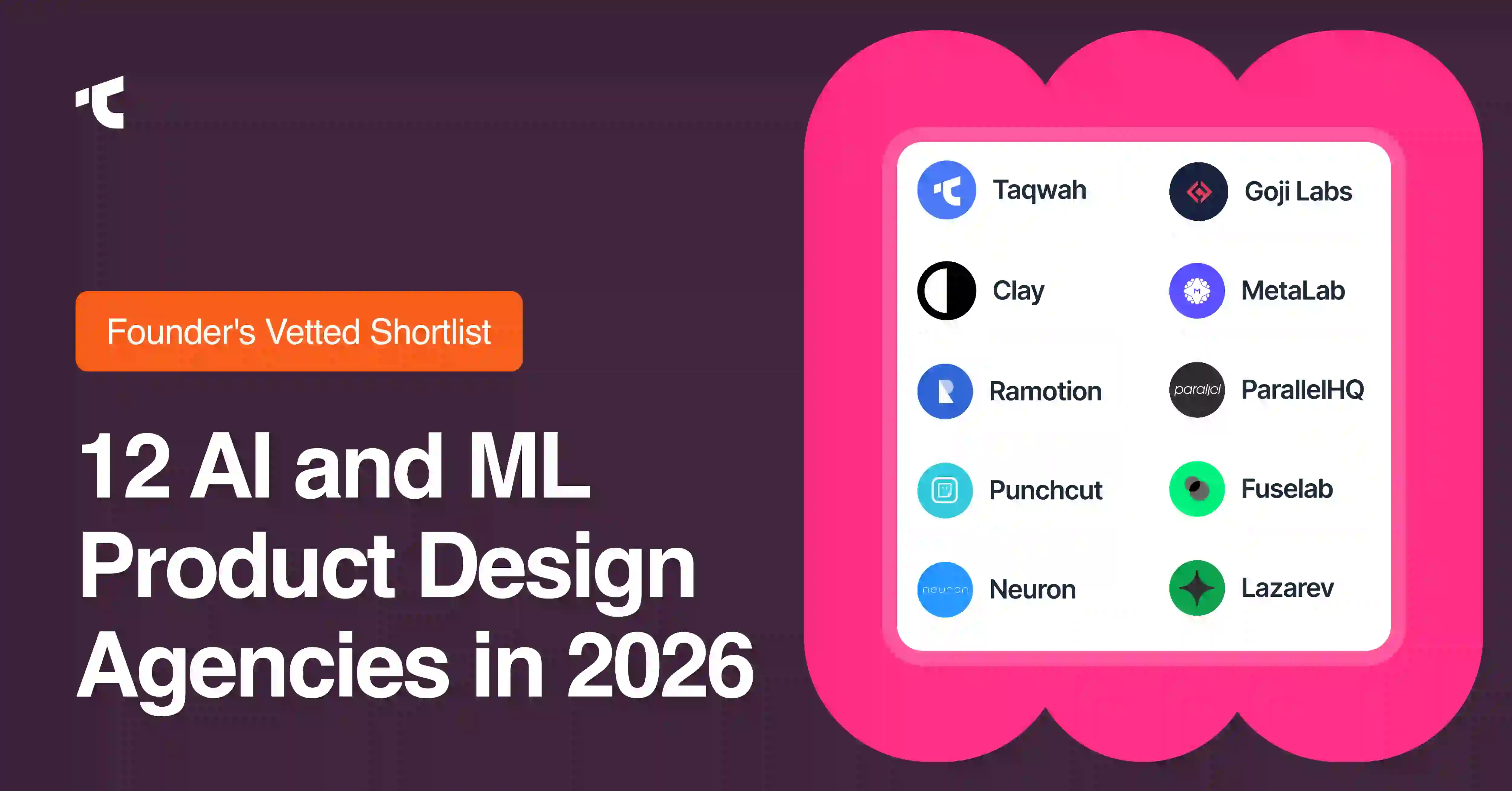
Most "best AI design agency" lists rank studios on portfolio polish, not on whether they've launched a real AI product. That's a problem, because AI design work is not like normal design work. You're not building fixed screens. You're building for a model that can be right, wrong, or somewhere in between, and the user still needs to know what to trust.
This guide asks just one thing: has the agency launched a live AI system where the model's output shaped a real user's choice? Not a mockup. Not a demo. A live product, with real users and real error rates.
If you're looking for a UI/UX design agency for AI products, an AI and ML product design agency, or an AI UX design firm, you want the same core skill: design for outputs that shift, not outputs that stay fixed. Below, we rank the top 12 UI/UX design agencies for AI and ML products in 2026, against just that standard.
One note up front: Taqwah, the maker of this guide, is on the list. No agency paid to be on it. Each rank was cross-checked with Clutch, DesignRush, and each firm's own case studies, and we score Taqwah by the same rules as every other firm.
Why the Right UI/UX Design Agency Important for Your AI Startup?
Poor product-market fit causes 43% of venture-backed startup failures, according to CB Insights' 2026 analysis of 431 shut-down companies. For AI products, a confusing or untrustworthy interface is often the reason product-market fit fails to materialize: the model works, the engineering holds up, but users cannot tell what to trust, so they stop returning. Choosing a design agency that has launched production AI systems, not just prototypes, is a direct hedge against that failure mode.
Our Methodology: How We Ranked These UI/UX AI Design Agencies
We ranked these AI UX design agencies using 7 criteria, weighted toward depth over breadth:
- Shipped production AI systems to named clients
- Documented process for uncertainty, trust, and error states
- Clutch-verified pricing and minimum project size
- Case studies with measurable outcomes, not just screenshots
- Senior team continuity across the engagement
- Engineering integration depth, from Figma to production code
- Discovery process rigor before any pixel gets drawn
We cross-checked public claims against Clutch profiles, DesignRush listings, and each agency's own published portfolio pages. Where pricing was not publicly disclosed, we noted that explicitly rather than estimating a number. We built this as a shortlist for founders who need to move fast without burning runway on the wrong design partner, not as an exhaustive directory. For a broader view of how agency models differ before committing to any single list, our breakdown of design agency types and our design agency vs. in-house comparison are useful starting points.
Top 12 UI/UX Design Agencies for AI Products in 2026
Each entry below lists what the agency does best, its pricing, and location where publicly available, and at least one genuine watch-out, so the list functions as a buying guide rather than a promotional roundup.
1. Taqwah: UI/UX Design Agency for AI Products

Taqwah is a UI/UX design agency for AI and ML startups built specifically around, from pre-seed prototypes through Series B product scale. We design onboarding flows, confidence indicators, and human-AI handoff patterns that turn probabilistic model outputs into interfaces users actually trust and return to.
Best for: AI-native startups that need a design partner fluent in uncertainty states, not a generalist SaaS studio adding an AI label to standard screens.
Specialty: trust-calibrated AI interface design, AI onboarding, and design systems built for teams shipping fast between funding rounds.
Pricing: project-based and retainer engagements scoped after a discovery call; we do not publish a fixed rate card because AI MVP scope varies too widely to price honestly in advance.
Watch out: Taqwah is not the right fit for teams that need a 300-person global agency with a dedicated account management layer and multi-country compliance staff; that scale of engagement is better served by an enterprise-tier firm like MetaLab or Clay, both covered below.
In our work with early-stage AI founders, the recurring failure pattern is the same one Fuselab, Neuron, and Punchcut independently describe further down this list: a technically sound model paired with an interface that never earns the user's trust. Our methodology starts with a UX audit of the model's failure modes before a single screen gets designed, a process closely related to the UX audit framework we use across all engagements. Founders who want a sense of our full service scope before a discovery call can review our services page directly.
2. Orbix Studio: UI/UX Design Agency for B2B SaaS and AI Products
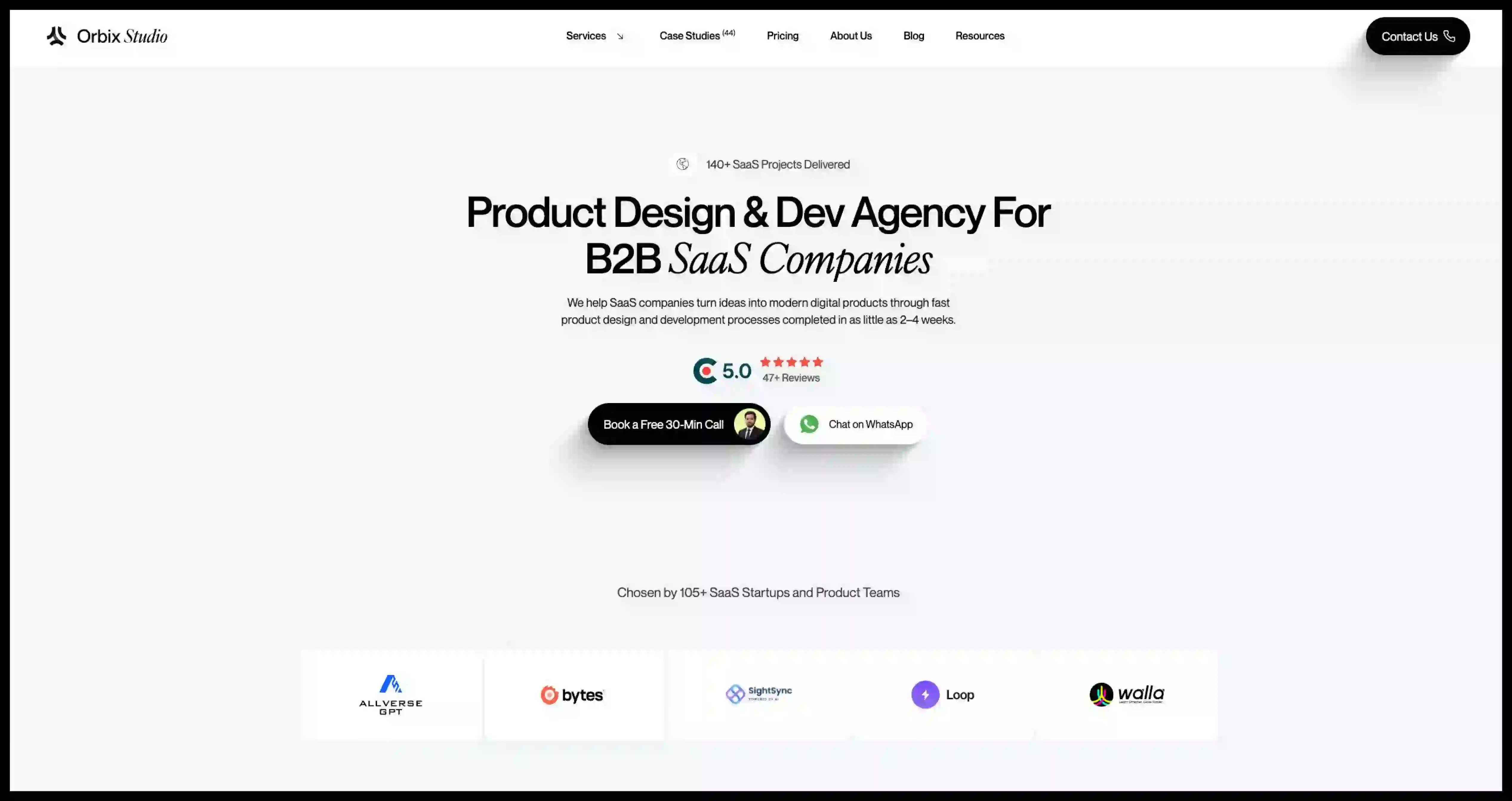
Orbix Studio is a UI/UX design agency for AI products that works with B2B SaaS and AI companies from seed to Series B. The team helps turn early ideas, complex workflows, and existing products into clear, usable experiences that are ready for development. Its design-to-development process can take a product from concept to launch in as little as 2 to 4 weeks.
For AI and SaaS products, the work goes beyond making interfaces look polished. Orbix focuses on the parts of a product that can make or break the user experience, including onboarding, dashboards, complex workflows, and accessible interfaces that meet WCAG 2.2 AA standards. Design and development can also happen together, so teams do not have to treat design as a separate step before engineering begins.
Orbix has delivered 140+ projects for 105+ SaaS startups, with experience across AI, fintech, healthcare, and HR tech. Its portfolio includes AI products such as PXGEN, an AI image generation platform, as well as clients such as Circle K and Privilee. The agency also has 48+ Clutch reviews with a 5.0 rating, while its client base has raised more than $2B in combined funding.
Best for: Seed to Series B SaaS and AI companies that need product design and development to move together. It can be a good fit for teams that need experienced product designers without having to build a large in-house design team.
What they specialize in: AI and SaaS product design, dashboards, onboarding, complex workflows, MVP design, design-to-development, and accessible product interfaces.
Pricing: Orbix operates on a monthly retainer, starting at $2,999 per month for the Startup Plan (100 hours) or $5,499 per month for the Enterprise Plan (200 hours). There are no setup fees or overage charges.
One thing to consider: The retainer model is better suited to teams that need ongoing design support. If you only need a single fixed-scope project, it is worth confirming the scope, timeline, and pricing before getting started.
3. 925Studios: Product Design Studio for Funded AI Startups
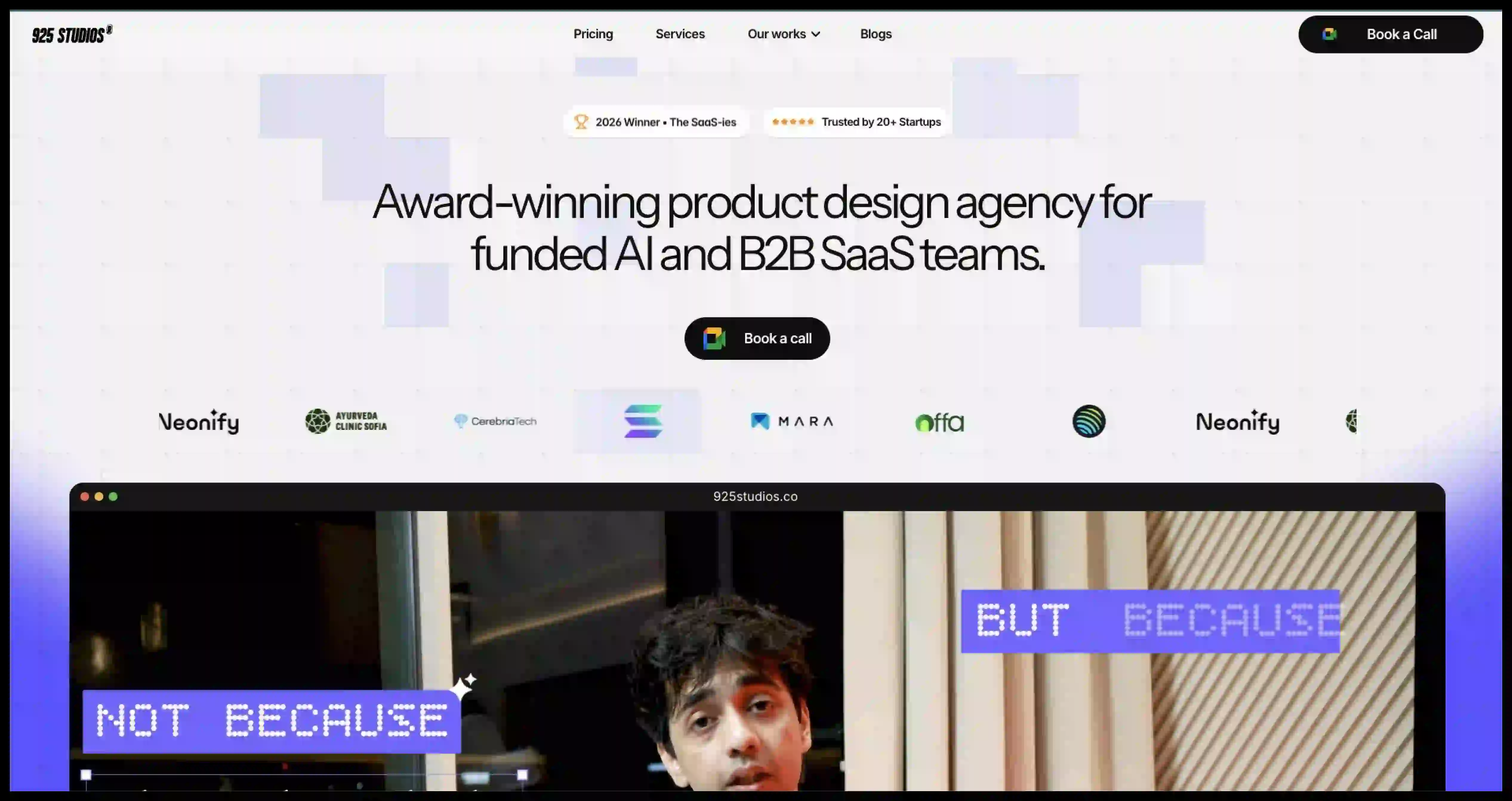
925Studios is a Delhi-based product design studio for funded AI and B2B SaaS teams, founded in 2023. A team of 9 to 15 designs the product UI, marketing site and design system together, with both founders working in the files. Clients include Arentha, which is building a persistent intelligence OS, and Offa, an AI marketplace matching about 10,000 buyers against 500,000+ properties.
Best for: Seed to Series A AI startups that want the product, site and design system designed by one team.
Specialty: AI product UX for early-stage teams, from first flows through launch, with a Loom walkthrough every 24 to 48 hours.
Pricing: Projects start at $5,000. Clutch lists an hourly rate of $25 to $49.
Watch out: 925Studios takes on 2 to 4 clients at a time, so enterprises that need a large embedded team or a research ops function will be better served by a bigger firm.
4. Punchcut: Best for Enterprise Multimodal AI and Autonomous Systems
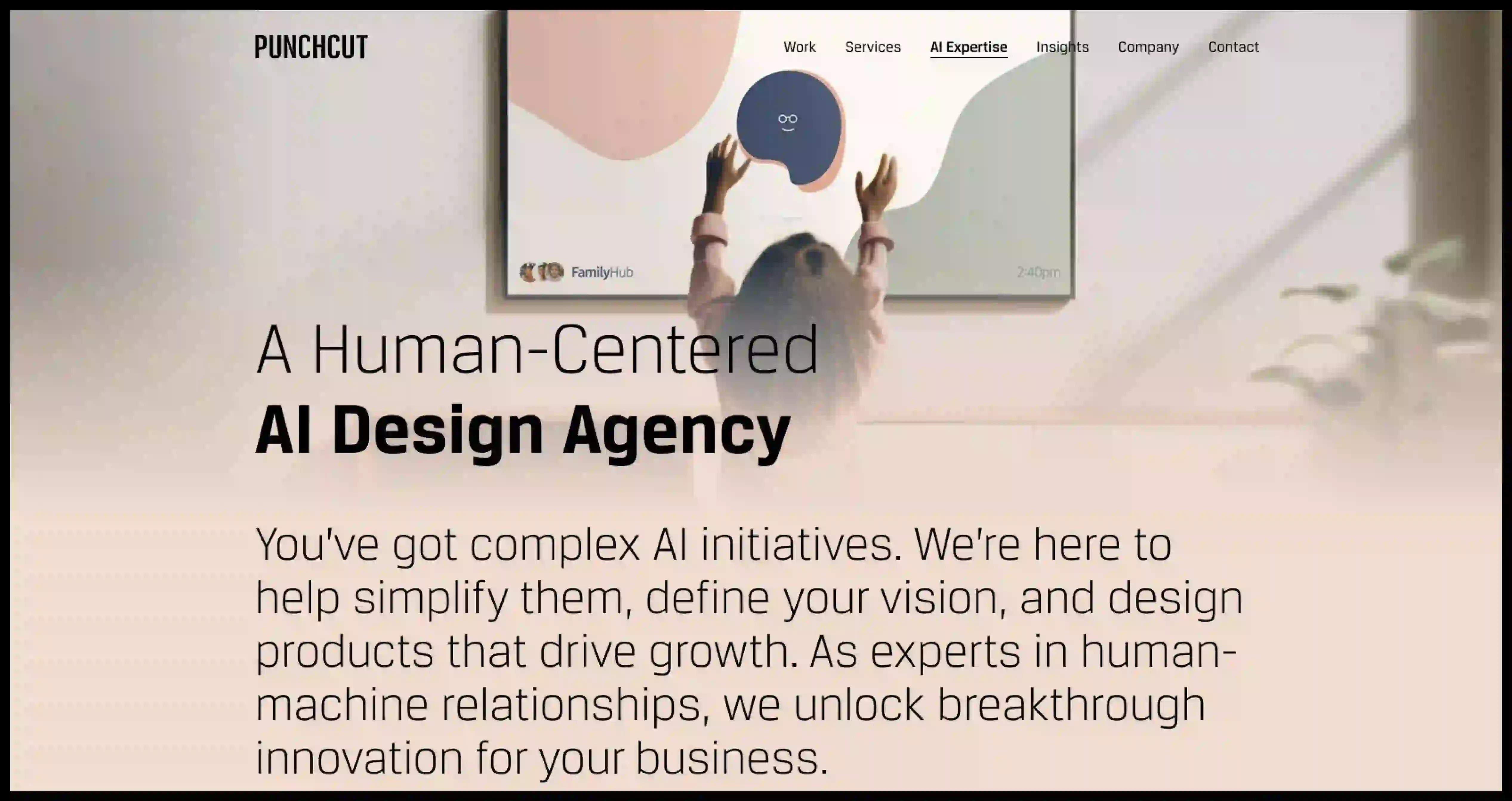
Punchcut is a San Francisco-based AI design agency for UI UX with over 20 years of experience in intelligent products, spanning AI agents, multimodal interfaces, and autonomous systems for enterprise clients.
Best for: large, funded companies building copilots, voice-and-visual multimodal products, or autonomous systems that span physical and digital touchpoints.
Specialty: human-machine interaction design across multimodal experiences, positioning Punchcut as one of the most AI-native design consultancies in the market.
Pricing: enterprise-tier engagements, typically starting well above $100,000, reflecting the firm's positioning toward large, well-funded AI programs rather than early-stage MVPs.
Watch out: Punchcut's pricing and engagement model put it out of reach for pre-seed or seed-stage founders; startups at that stage should look toward Taqwah, ParallelHQ, or Goji Labs further down this list.
5. Fuselab Creative: Best for Regulated and Government AI Systems
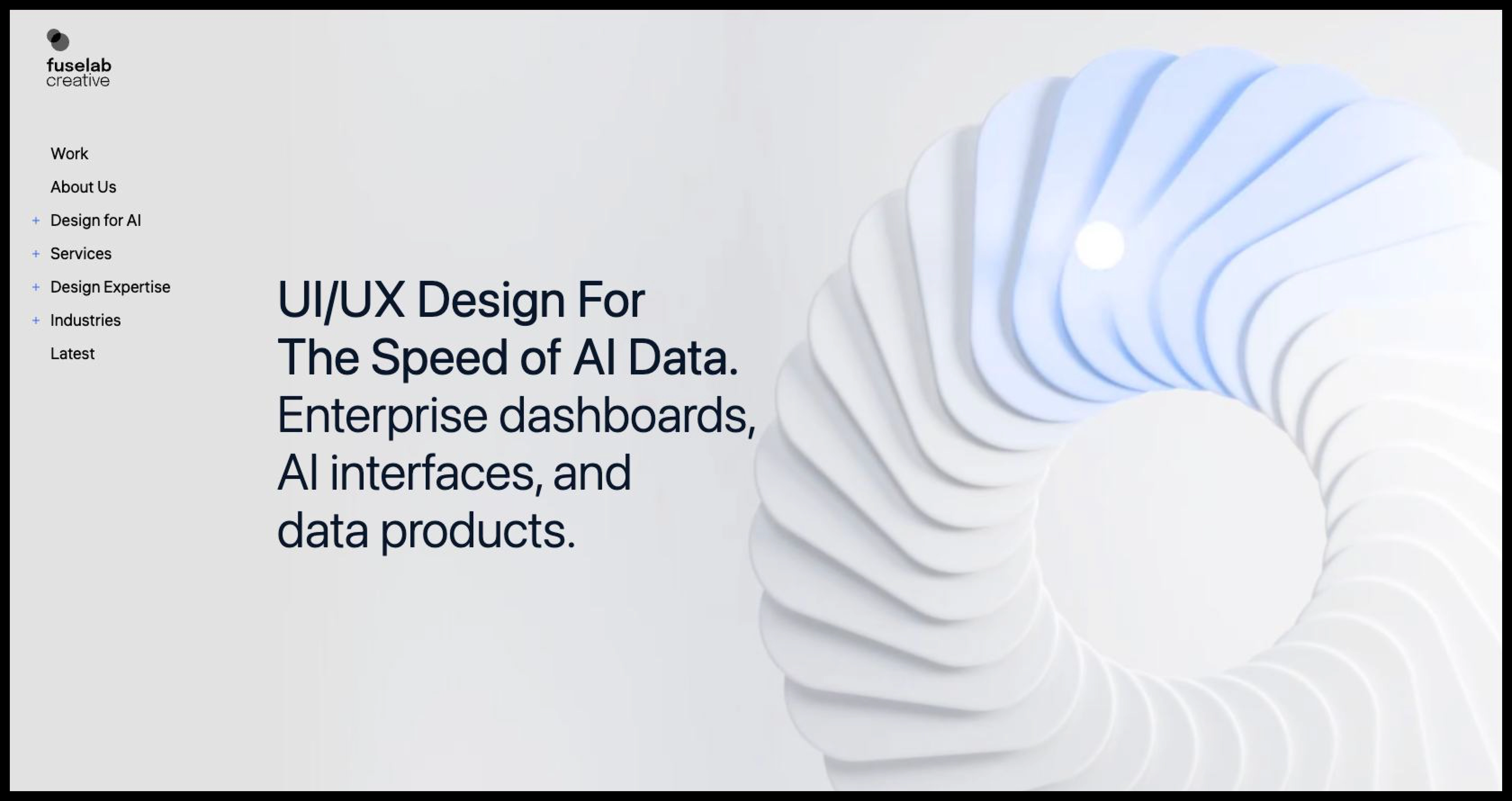
Fuselab Creative is a UI/UX design agency based in McLean, Virginia, specializing in dashboard design, data visualization, and AI interface design for regulated and enterprise environments.
Best for: AI startups and agencies operating in healthcare, government, or fintech, where compliance, auditability, and multi-role data access shape the interface as much as the AI model itself.
Specialty: production of AI systems, including a knowledge-graph conversational AI product and an autonomous-vehicle AI interface, built for named clients such as NASA, Fiserv, Uber, NIH, and the California Department of Health Care Services.
Pricing: Clutch lists an hourly rate of $100 to $149 and a minimum project size of around $25,000.
Watch out: Fuselab's regulated-industry depth is a strength for compliance-heavy AI products, but it means less experience with consumer-facing, growth-driven AI apps compared with a firm like MetaLab.
6. Neuron: Best for B2B Workplace AI Tools
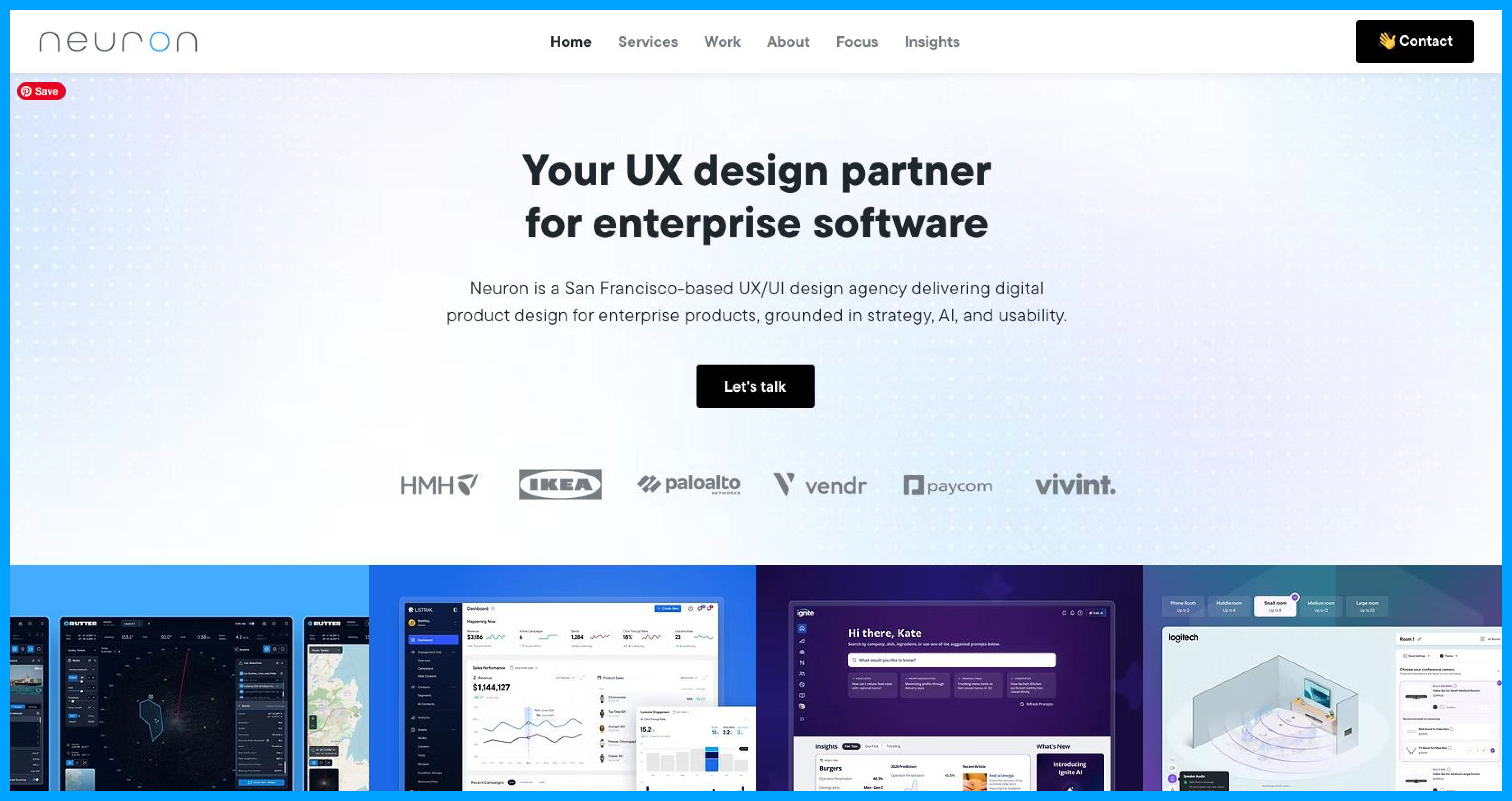
Neuron is a San Francisco-based UX/UI design agency delivering digital product design for enterprise software, with a design practice built around AI-driven systems for sales, HR, and analytics tools.
Best for: B2B startups embedding AI into complex workplace software, where usability and adoption inside a large organization matter more than visual branding.
Specialty: DesignOps and human-centric AI interface design for dense, data-heavy enterprise products.
Pricing: Clutch data lists an hourly rate around $150 to $199, with reported minimum project sizes as low as $25,000, depending on scope.
Watch out: Neuron is process-driven rather than visually adventurous; startups that need a strong consumer brand identity alongside the AI product should pair Neuron's UX depth with a brand-focused partner or choose a firm like Clay instead.
7. MetaLab: Best for Consumer-Scale AI Products
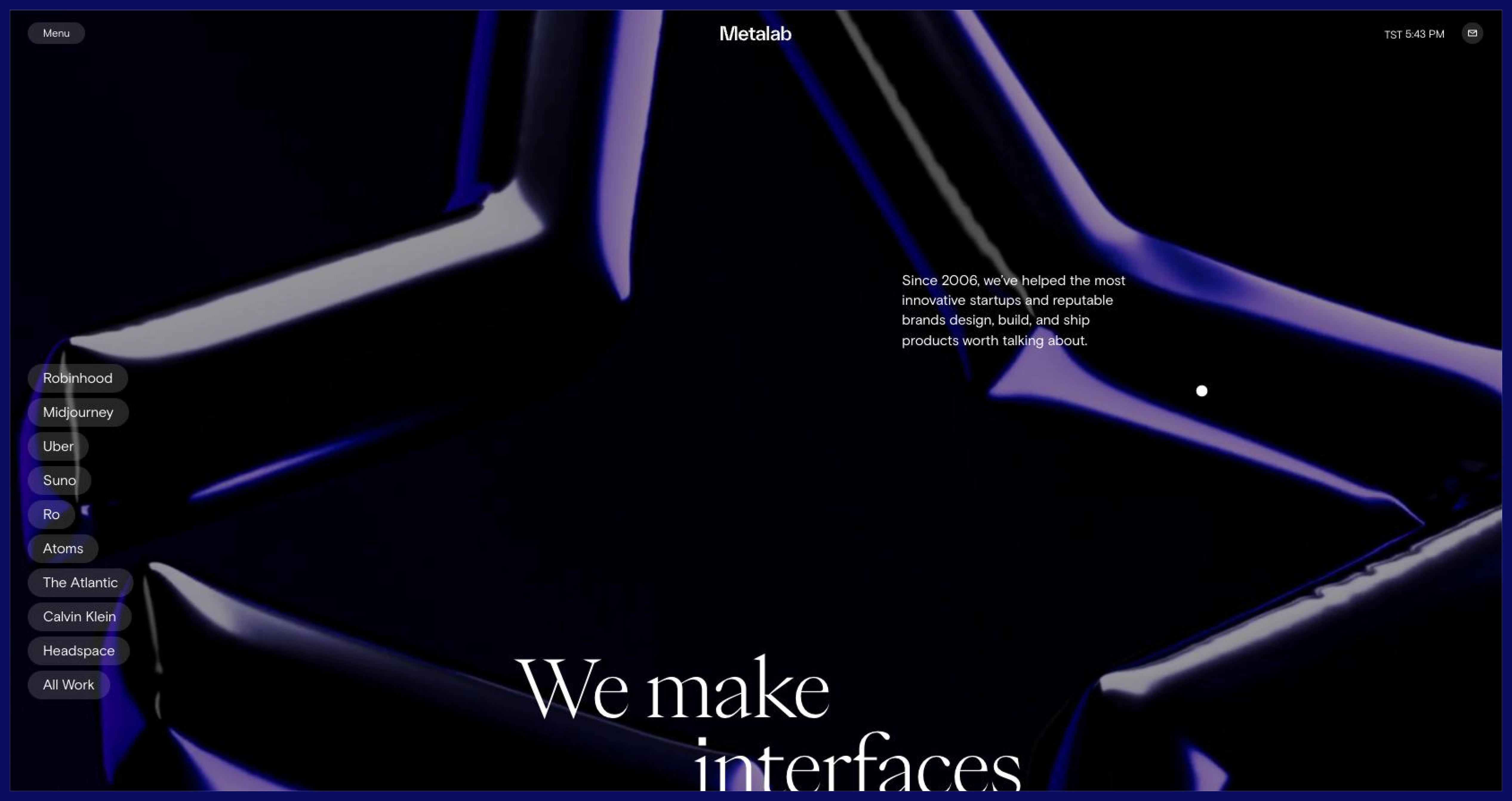
MetaLab is a product design agency headquartered in Vancouver and Victoria, Canada, known for shipping interface-defining work since 2006, including early design contributions to Slack.
Best for: well-funded, consumer-scale AI startups that need interface polish comparable to the biggest names in tech.
Specialty: product-first AI interface design, with named client work spanning Slack, Coinbase, Oculus, Midjourney, and Robinhood.
Pricing: Clutch lists a minimum project size of $100,000 or more, positioning MetaLab firmly in enterprise territory.
Watch out: MetaLab's $100,000-plus floor rules out most seed and Series A startups; founders at that stage should compare Taqwah, ParallelHQ, or Goji Labs instead.
8. Clay (Clay Global): Best for Premium AI Brand and Product Design
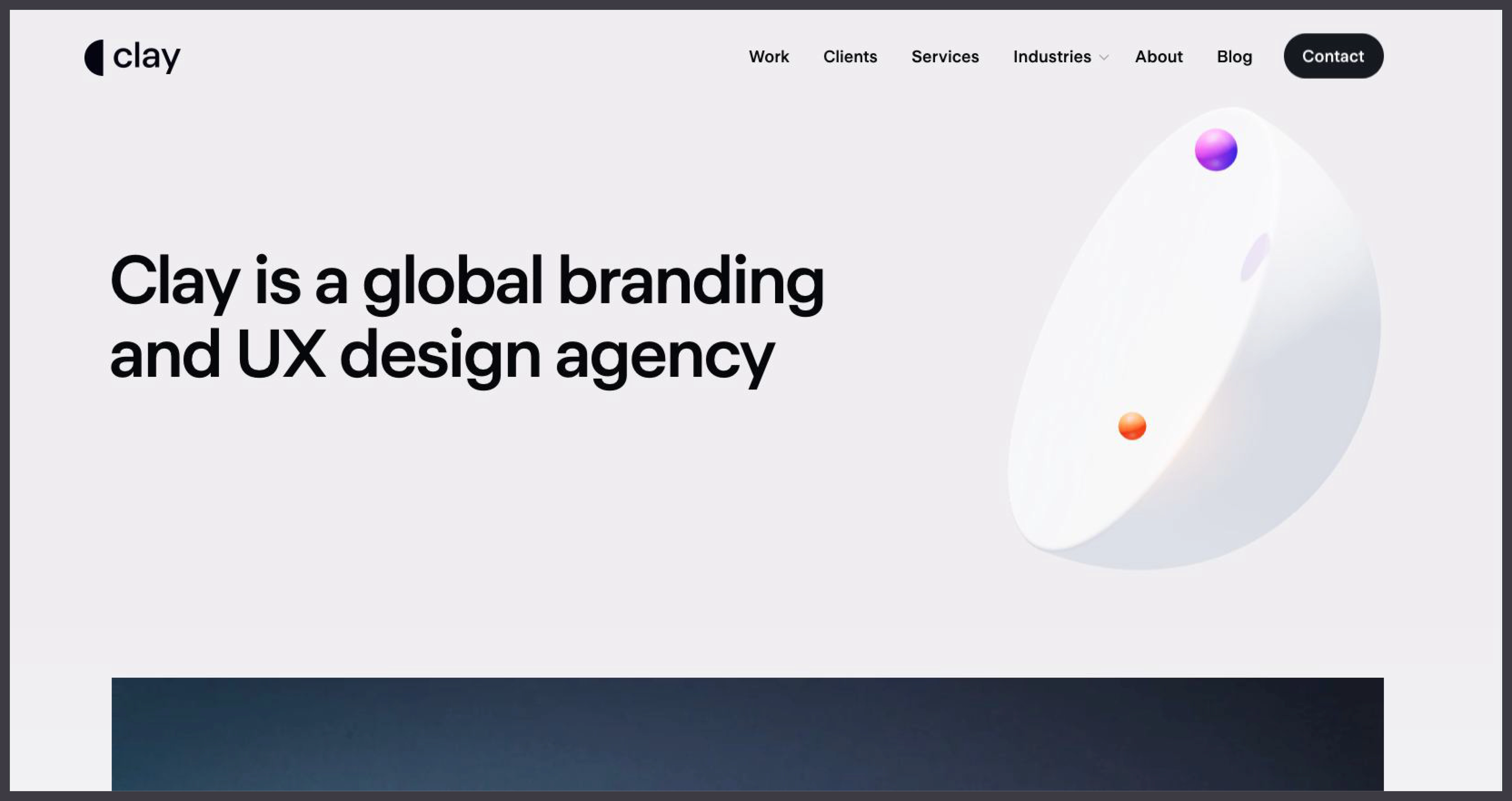
Clay is a UI/UX design and branding agency based in San Francisco, elevating brand and product experiences for growth-stage technology companies since 2009.
Best for: AI startups at Series B or later that need brand identity and product design unified under one senior-led team.
Specialty: high-craft visual design and design systems, with client work including Slack, Coinbase, Stripe, and Snapchat.
Pricing: Clutch lists an hourly rate of $150 to $199 with a minimum project size of $50,000 or more.
Watch out: Clay's premium positioning and $50,000 floor exclude most bootstrapped or pre-seed AI teams; the firm is a stronger fit once a startup has funding to invest in brand as well as product.
9. Ramotion: Best for Brand-Led AI Product Design
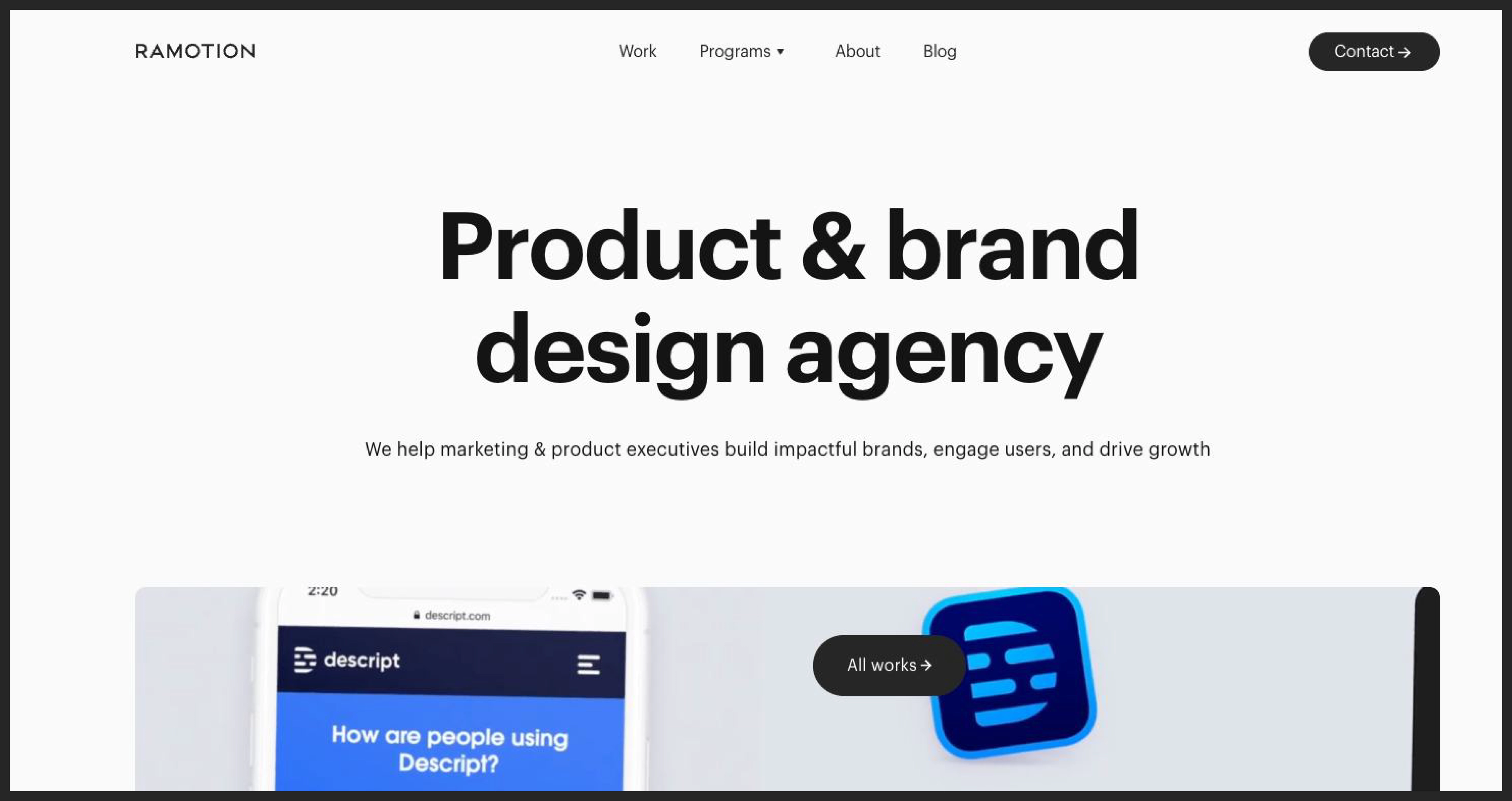
Ramotion is a San Francisco-based digital product and brand design agency with over a decade of experience serving Silicon Valley startups and Fortune 500 companies alike.
Best for: AI startups that want brand identity and product UI to reinforce each other, rather than treating them as separate workstreams.
Specialty: design systems that translate brand identity into functioning component libraries, with past client work for Mozilla Firefox, Salesforce, Netflix, and Adobe.
Pricing: Clutch data shows an hourly rate of $150 to $199 and a minimum project size of around $50,000.
Watch out: Ramotion's minimum project size makes it a poor fit for early-stage teams still validating product-market fit; its strength is scaling an already-working AI product's design maturity, not designing the first MVP.
10. Lazarev.agency: Best for AI Copilots and SaaS Decision Engines
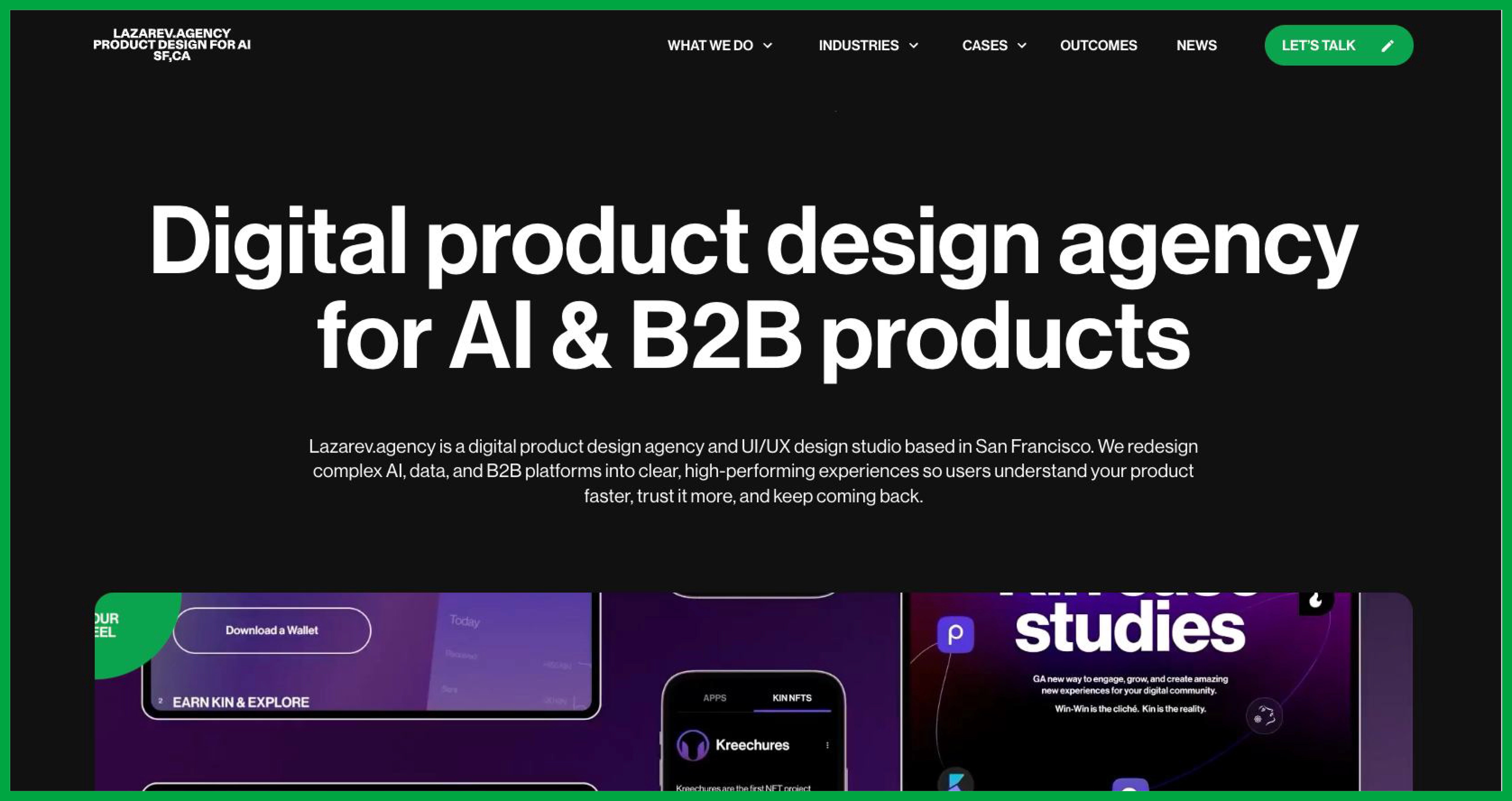
Lazarev.agency is a digital product design agency and UI/UX design studio based in San Francisco, redesigning complex AI, data, and B2B platforms since 2015.
Best for: SaaS startups building AI copilots, decision engines, or data-heavy vertical products that need model outputs translated into something a non-technical user can act on confidently.
Specialty: The agency has shipped over 30 AI products since 2017, spanning fintech, EdTech, and Web3, with a stated focus on making complex intelligence feel simple and trustworthy inside a demo or a live account.
Pricing: public sources report an hourly rate around $100 to $149, with project pricing commonly landing between $15,000 and $60,000, depending on scope.
Watch out: Lazarev.agency's process suits teams with a reasonably defined product vision already; earlier-stage founders still discovering their core AI interaction model may need a more sprint-based, exploratory partner first.
11. Goji Labs: Best for AI MVP Design and Development
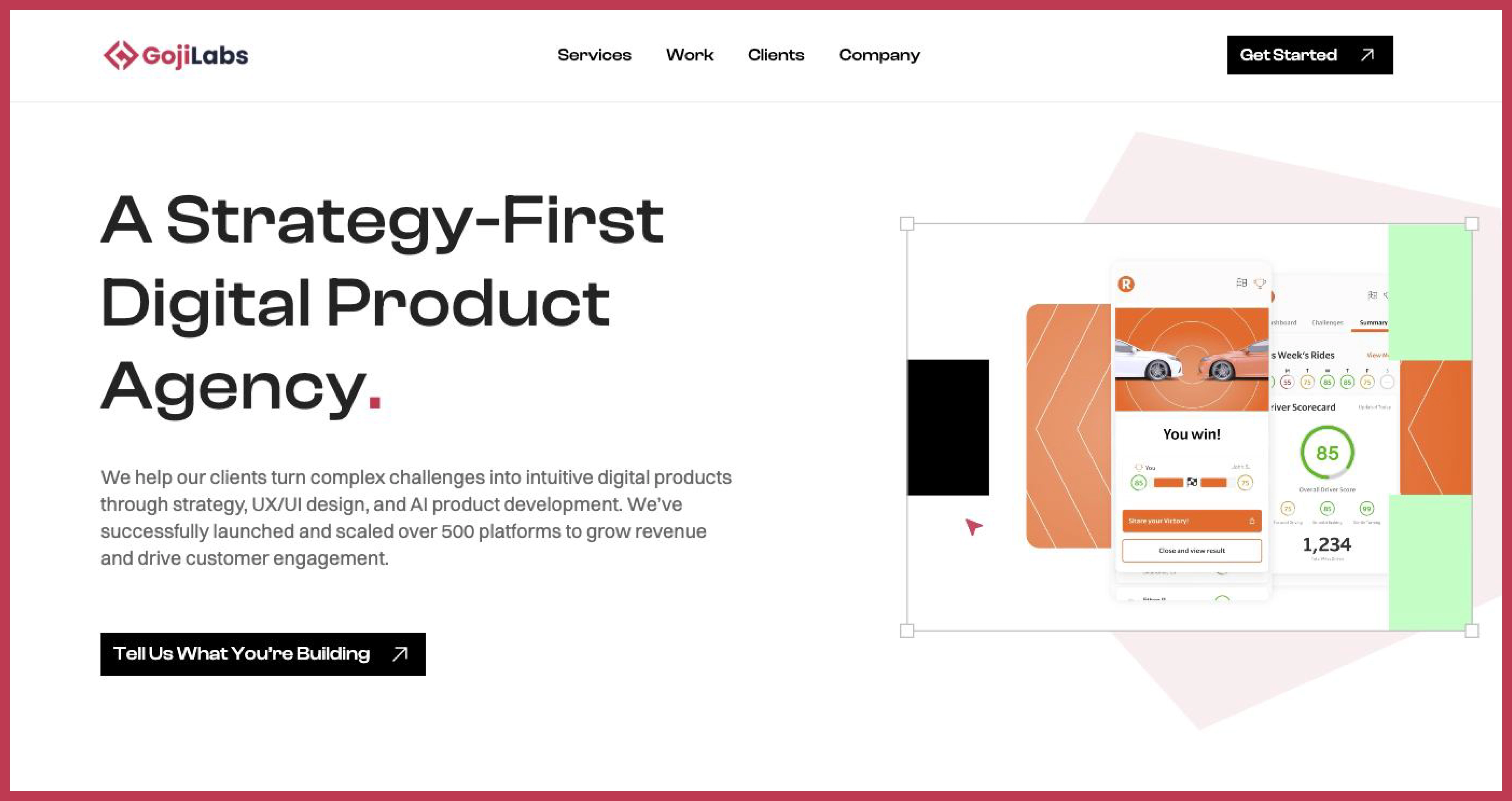
Goji Labs is a Los Angeles-based digital product agency combining AI product development, UX/UI design, and custom software development under one team since 2014.
Best for: AI startups that need design and engineering under a single roof to move from concept to a working MVP without coordinating two separate vendors.
Specialty: full-lifecycle product delivery, having shipped over 500 digital products for clients spanning healthcare, fintech, and AI, with engagements typically starting around $15,000 to $25,000.
Pricing: Clutch lists an hourly rate of $100 to $149 with a minimum project size of around $25,000, though entry-level engagements have started lower depending on scope.
Watch out: because Goji Labs blends design and development, founders who already have a strong internal engineering team may find the combined offering less efficient than hiring a pure design specialist; see our comparison of top SaaS MVP design agencies for design-only alternatives at a similar stage.
12. ParallelHQ: Best for Seed-Stage AI Startups
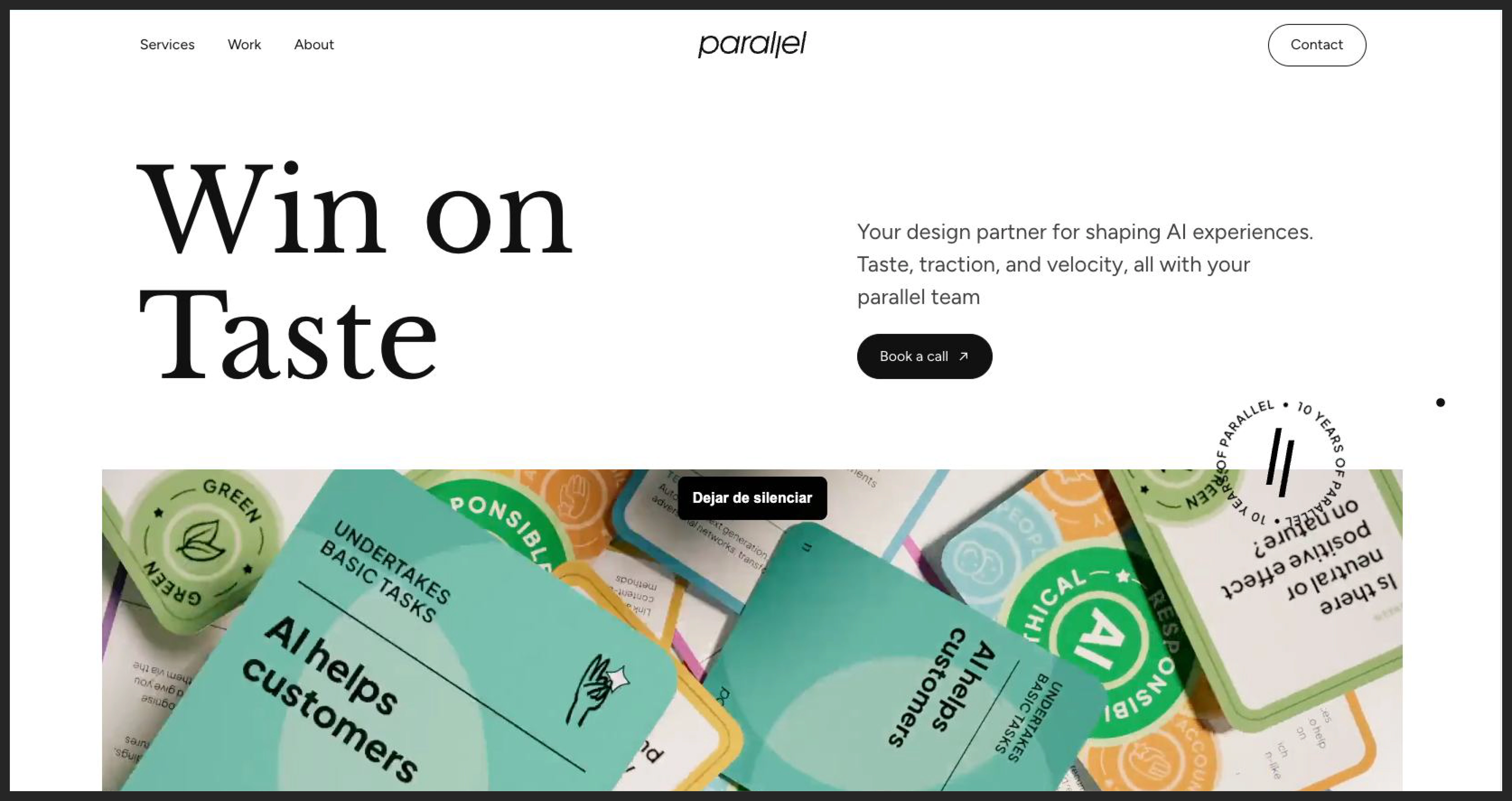
ParallelHQ is an AI-native product design agency built around early-stage AI and SaaS startups, running design sprints, UX audits, and MVP development on a compressed, startup-speed timeline.
Best for: seed-stage founders who need a design partner that survives pivots and moves at Slack-and-Figma speed rather than an eight-week enterprise discovery phase.
Specialty: confidence indicators, low-output states, and user correction flows built specifically for probabilistic AI products, not general SaaS dashboards.
Pricing: engagements typically start around $15,000 to $40,000, with design retainers reported between $3,000 and $30,000 per month depending on scope.
Watch-out: ParallelHQ's startup-native model is built for speed and lean scope; enterprise AI teams needing large-scale compliance work or multi-country design systems will outgrow this model quickly and should look to Punchcut, Fuselab Creative, or MetaLab instead.
Agency Comparison: Pricing, Location, and Specialty at a Glance
How Much Does UI/UX Design for AI and ML Products Cost in 2026?
AI UX design projects in 2026 typically cost between $15,000 and $150,000, depending on scope, agency tier, and whether the engagement includes engineering handoff. Clutch's pricing data puts the average UX engagement across the broader market at roughly $85,000, but AI-specific work sits on a wider spectrum because the interface complexity varies so much between a chat-based MVP and a multi-role enterprise dashboard.
Budget by stage breaks down into 3 general tiers:
- Proof-of-concept and small UX audits: $5,000 to $15,000
- Full AI MVP design, from discovery through developer handoff: $15,000 to $50,000
- Enterprise AI transformation across multiple product surfaces: $50,000 to $150,000 or more
Hourly rates follow a similar spread. US-based specialist AI UX design agencies charge $100 to $199 per hour, and offshore or distributed teams charge $25 to $99 per hour, though regulated-industry work tends to cost more regardless of location because of the added compliance and accessibility requirements.
Founders comparing quotes against a broader SaaS baseline can review our full breakdown of SaaS UI/UX design costs for context on how AI-specific pricing compares with standard product design engagements.
How to Choose the Right UI/UX Design Agency for AI and ML Products
Choosing the right agency starts with verifying real AI experience, not portfolio polish. Use this checklist before signing any proposal:
- Ask about their fallback-state design process for when the model is wrong.
- Request case studies with outcome data, not only final screenshots.
- Verify they design for uncertainty and confidence, not just accuracy.
- Test the human-AI handoff pattern in a live product they have launched.
- Confirm senior designer involvement continues past the pitch stage.
- Check for a documented model-feedback loop between design and engineering.
- Clarify whether the team is design-led or engineering-led before you sign.
- Demand a named example of domain-specific AI experience in your industry.
A generalist UX agency can handle AI interface design if it has genuinely launched AI products before; the risk is agencies that treat AI as a feature added to a standard dashboard rather than a fundamentally different interaction model. Run a lightweight UX audit on your current product before any agency conversation. It gives you a concrete list of trust and usability gaps to test candidates against, rather than judging pitches on visual taste alone. If you are still deciding between an agency and an internal hire, our design agency vs. in-house comparison walks through the tradeoffs in more depth, and our guide to evaluating SaaS UI/UX design agencies covers the broader vetting process step by step.
UI/UX Design Agency for AI Products vs. Traditional UX Agency: What's the Real Difference?
A traditional UX agency designs for deterministic systems, where the same input produces the same output every time, and success means reducing clicks and confusion. A design agency for AI products designs for probabilistic systems, where the same input can produce different outputs, and success means calibrating trust alongside usability.
That difference shows up most clearly in 4 places: onboarding, error states, explainability, and ongoing model drift. Traditional onboarding tours a fixed feature set. AI onboarding has to set honest expectations about what the system can and cannot do, echoing the same principle Nielsen Norman Group researchers have raised repeatedly in their UX research on AI trust, where consistent, predictable interactions measurably increase user trust over time. Traditional error states show a clear failure message. AI error states have to explain a wrong or low-confidence output without eroding confidence in the whole system. A traditional UX agency without a documented AI process can absolutely learn these patterns, but founders should confirm that learning has already happened on a launched product before hiring, not during the engagement itself. Startups evaluating whether their current product needs deeper research before a redesign should also review our list of the best UX research agencies, since AI products often need more upfront research into user mental models than standard SaaS tools do.
UI/UX Design Trends and Best Practices for AI Products in 2026
UI/UX design for AI products in 2026 is shifting toward 4 dominant patterns: agentic interfaces that act on a user's behalf, confidence-first design as a default rather than an add-on, correction-focused interaction flows, and multimodal input handling across text, voice, and image. Our analysis of the agencies covered in this guide shows every top-ranked firm has already built a process around at least 3 of these 4 patterns, while generalist studios still treat AI as a single chat window bolted onto an existing dashboard.
Agentic interfaces mark the clearest shift. Instead of a single prompt-and-response exchange, AI products in 2026 increasingly let a model take multi-step actions, book a meeting, draft a document, or reorder a workflow, before a user reviews the outcome. That interaction model demands new design patterns for showing what the agent is about to do, pausing for approval at the right moments, and letting a user undo an action cleanly.
Confidence-first design has moved from a nice-to-have to a baseline expectation. Early AI products often buried uncertainty in fine print or omitted it altogether. Based on our experience across AI onboarding and dashboard projects, products that surface confidence scores, source citations, or "I'm not sure" states directly in the primary interface see fewer support tickets and higher week-two retention than products that hide that information behind a settings menu.
A handful of design best practices apply across nearly every agency on this list, regardless of specialty:
- Show the model's reasoning or sources whenever a recommendation carries real consequences.
- Default to conservative claims and let the user request more detail, rather than overpromising accuracy upfront.
- Build a visible correction path so users can fix a wrong output without starting over.
- Separate automation from augmentation clearly, so users always know which actions the system took on its own.
- Test onboarding against first-time users who have never interacted with an AI product before, not only power users.
Regulatory pressure is also reshaping the AI product design agency landscape. Firms like Fuselab Creative that already operate inside government and healthcare compliance frameworks have a structural advantage as explainability requirements tighten across regulated industries in 2026. Startups outside regulated sectors are not exempt from this shift either: consumer trust expectations are converging with what regulators require, which is part of why trust calibration now sits at the center of nearly every agency's stated methodology in this guide.
Frequently Asked Questions
What is AI interface design?
AI interface design is the practice of designing screens and interaction flows for products where a machine learning model generates the content, recommendations, or decisions the user sees. It focuses on trust, transparency, and graceful failure rather than fixed, predictable outputs.
How much does a UI/UX design agency for AI products cost?
Projects typically range from $15,000 for a focused MVP engagement to $150,000 or more for enterprise AI systems. Hourly rates run $100 to $199 for US-based specialists and $25 to $99 for offshore teams.
Can a traditional UX agency handle AI interface design?
Yes, if the agency has genuinely launched production AI systems before. Ask for named case studies showing how they designed for uncertainty, confidence, and error recovery, not just a portfolio with one AI-labeled project added.
What should I look for in a UI/UX design agency for AI products?
Look for launched production AI systems with named clients, a documented process for uncertainty and trust design, senior team continuity, and pricing transparency. Portfolio polish alone does not confirm real AI design experience.
How long does a UI/UX design project for AI products take?
Most AI MVP design engagements take 6 to 12 weeks from discovery through developer handoff. Full enterprise AI transformations across multiple product surfaces typically span 3 to 6 months or longer.
Why is trust critical in AI interface design?
Trust is critical because AI outputs are probabilistic, not fixed. Users abandon products when they cannot tell whether to believe a result. Confidence indicators, explainability, and clear fallback states directly affect activation and retention.
What deliverables should I expect from a UI/UX design agency for AI products?
Expect a discovery report on model failure modes, Figma design systems, confidence and error-state components, an onboarding flow, and engineering-ready specifications. Agencies with production AI experience also deliver a documented uncertainty and trust-calibration framework.
What is the difference between AI product design and AI feature design?
AI product design shapes an entire experience around a model's core capability, including onboarding, trust, and error recovery. AI feature design adds a single AI-powered capability, like a summary button, inside an already-built product.
Our Honest Take
The right UI/UX design agency for AI products matches its documented process to your specific problem: probabilistic outputs, uncertainty communication, and a human-AI handoff that does not break user trust the first time the model gets something wrong, rather than simply carrying the longest client logo list. Start with the agencies on this list that have launched production AI systems in your industry, verify their pricing against your actual runway, and ask every finalist to walk through a real failure case, not just a highlight reel.
Taqwah works exclusively with AI and ML startups building exactly these kinds of trust-first interfaces. If you want a second opinion on your current product before committing to a full redesign, our services page outlines how we run that first discovery conversation, and our SaaS Hero Audit tool gives you a free, structured starting point.
Disclosure: Taqwah is the publisher of this guide and appears in the ranking above. Every other agency's placement was evaluated using the same 7 criteria listed in the methodology section, and no agency, including Taqwah, paid for inclusion or position.



.avif)