.svg)

.svg)
%201.svg)




Founders use "brand identity" and "visual identity" as if they mean the same thing. They do not. A startup can have a polished logo and color palette and still have no real brand identity, because visual identity is only one layer inside a larger system. This guide breaks down brand identity and visual identity, shows exactly where brand strategy fits between them, and covers what this distinction means specifically for a SaaS startup building its first brand.
What Is Brand Identity?
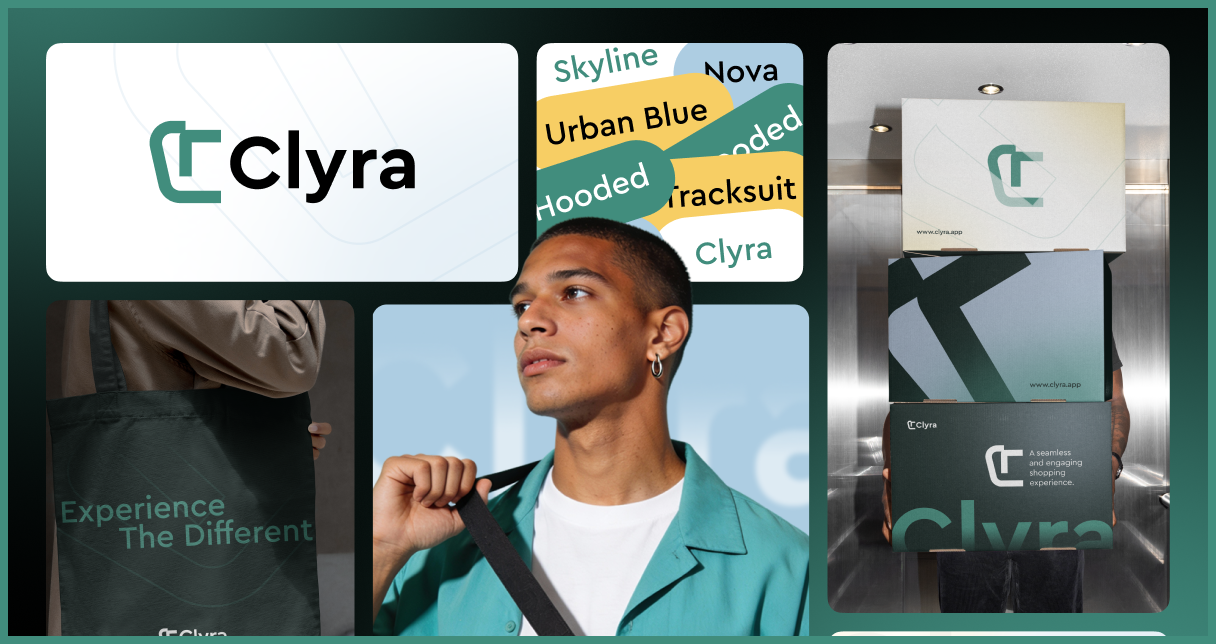
Brand identity is the full system a company uses to express itself consistently across every touchpoint a customer encounters. It includes brand voice, brand personality, messaging, and the visual system, applied consistently across a product, website, sales deck, and support emails.
The importance of brand identity comes from consistency, not decoration. A user who sees the same tone, the same visual language, and the same promise across a landing page, a product interface, and an invoice trusts that company faster than one whose brand feels different in every place they encounter it.
Brand identity design covers 3 layers working together:
- Strategic foundation. Positioning, values, and the reason the company exists.
- Verbal identity. Brand voice, tone, and core messaging.
- Visual identity. Logo, color, typography, and imagery.
Most founders only budget for layer 3. That is the mistake this guide exists to prevent.
What Is Visual Identity?

Visual identity is the visible design system that represents a brand: the logo, color palette, typography, imagery, and layout patterns applied consistently across every surface. Visual identity answers "what does this brand look like," not "what does this brand mean" or "why does this brand exist."
A visual brand identity typically includes:
- A primary logo and its approved variations
- A defined color palette (primary, secondary, and accent colors)
- Typography for headings, body text, and product UI
- An iconography and imagery style
- Spacing, layout, and design pattern guidelines
The visual identity of a brand is the layer people notice first, since it is what appears on a screen or a business card in the first half-second of contact. That is also why it gets confused for the whole of brand identity. It is real, necessary work, but it is 1 layer of a 3-layer system, not the whole system.
What Is Brand Strategy?
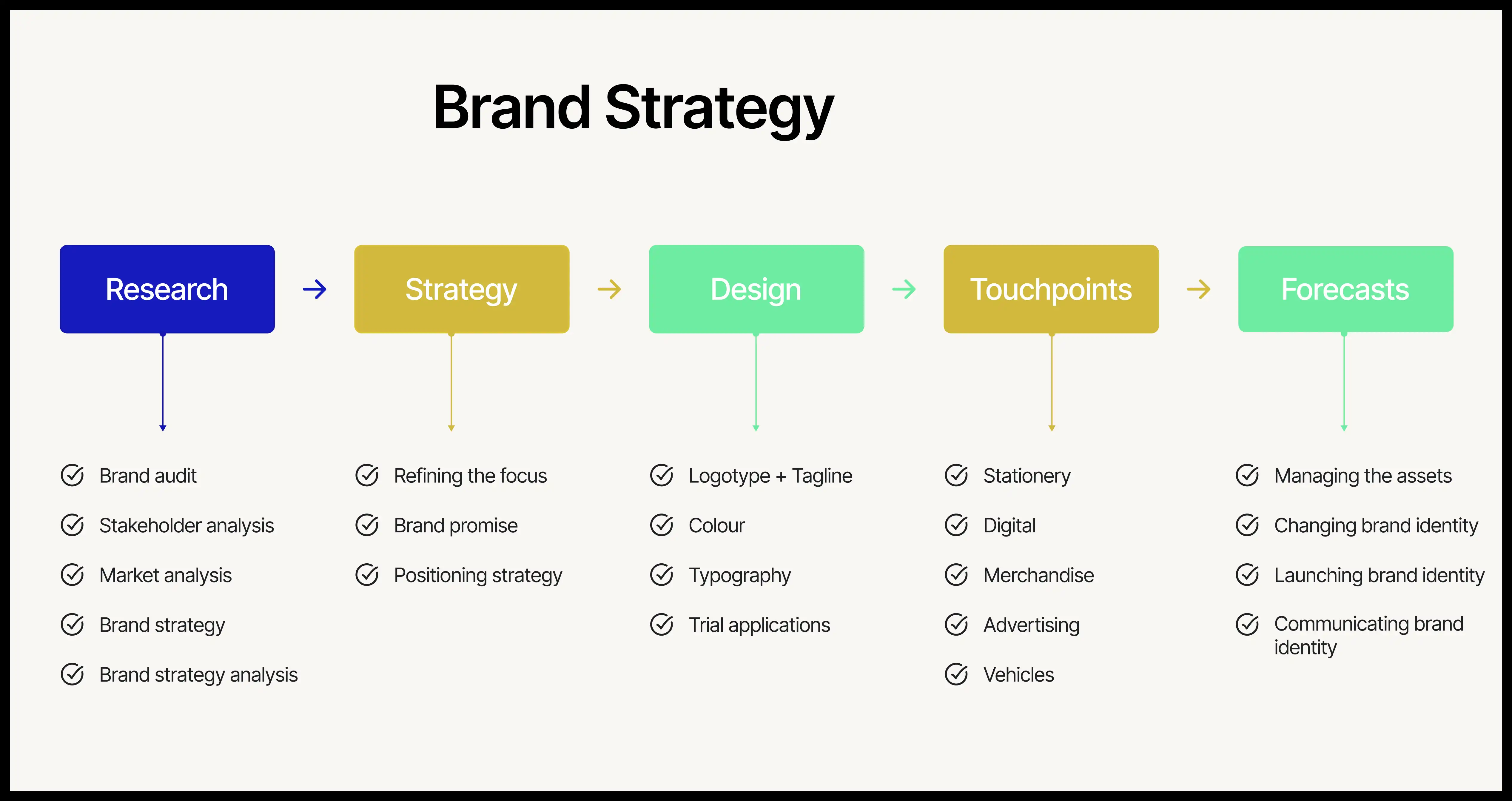
Brand strategy is the non-visual foundation that defines why a company exists, who it serves, and how it wants to be understood in the market. It answers questions no logo or color palette can answer on its own: What problem does this company solve that others do not? Who is the target audience? What does this company want to be known for in 5 years?
Brand strategy typically includes 4 components:
- Positioning. Where the company sits relative to competitors, and what makes it genuinely different, not just differently styled.
- Target audience definition. Who the brand is built to serve, specific enough to guide real decisions, not a vague "everyone" statement.
- Core values and mission. The reasoning behind the business that stays constant even as products and pricing change.
- Messaging framework. The key points a company repeats consistently across sales calls, the website, and the product itself.
Brand strategy has no visual component of its own. A founder can write a complete brand strategy document without ever opening a design tool. This is exactly why it gets skipped: it produces no image to look at, so it feels like it can wait. It cannot. Brand strategy is the input that tells a designer what the logo, color palette, and typography are supposed to communicate. Skip it, and a designer is left guessing what the brand should feel like, which produces a visual identity that looks fine in isolation but does not actually say anything specific about the company.
Why does brand identity feel important, but brand strategy feel optional?
Brand strategy is invisible until it is missing. A startup with strong strategy and weak visuals still has a clear, consistent story that customers and investors can repeat back. A startup with strong visuals and no strategy has a brand that looks expensive but cannot explain, in one sentence, why it exists or who it is for.
Brand Identity vs. Visual Identity vs. Brand Strategy
Here is the direct comparison, since this is the question most founders are actually asking.
The difference between brand identity and visual identity, in 1 sentence: visual identity is what a brand looks like, brand identity is everything a brand is and does consistently, and brand strategy is the reasoning underneath both.
The difference between branding and visual identity follows the same logic. "Branding" as a general term usually refers to the full brand identity system, while visual identity is strictly the design layer inside it. Branding vs. brand identity is mostly a language question, not a real distinction. Most marketers use them interchangeably to mean the same full system.
Why this matters in practice: an agency that only delivers visual identity (a logo and a style guide) without brand strategy underneath it produces a brand that looks finished but has no positioning behind it. That gap shows up fast. The visual identity stops holding together the moment the product, pricing, or messaging changes, because there was no strategic foundation keeping it in place.
Brand Identity for SaaS Startups
SaaS brand identity works under a different set of constraints than consumer or retail branding, and most general branding guides miss this entirely.
A retail brand's identity mostly lives on packaging, ads, and a storefront. A SaaS brand identity has to survive inside the product itself: the login screen, the onboarding flow, empty states, error messages, and a data-heavy dashboard a user might stare at for hours a day. A logo that looks great on a landing page but was never designed with the product's actual interface in mind creates a jarring gap the moment a user signs up.
SaaS brand identity design examples that get this right share 3 traits:
- The identity extends into the product UI, not just the marketing site. Color and typography choices made for a homepage need to still work inside a dense dashboard with tables, filters, and notifications.
- The visual system communicates the product's core promise. A security tool needs to visually communicate trust and control. A creative tool can visually communicate energy and speed. The identity is not generic, it is built around what that specific SaaS category needs to prove.
- The saas company logo design holds up at small sizes and inside a browser tab, sidebar, and app icon, not just on a full-size hero banner.
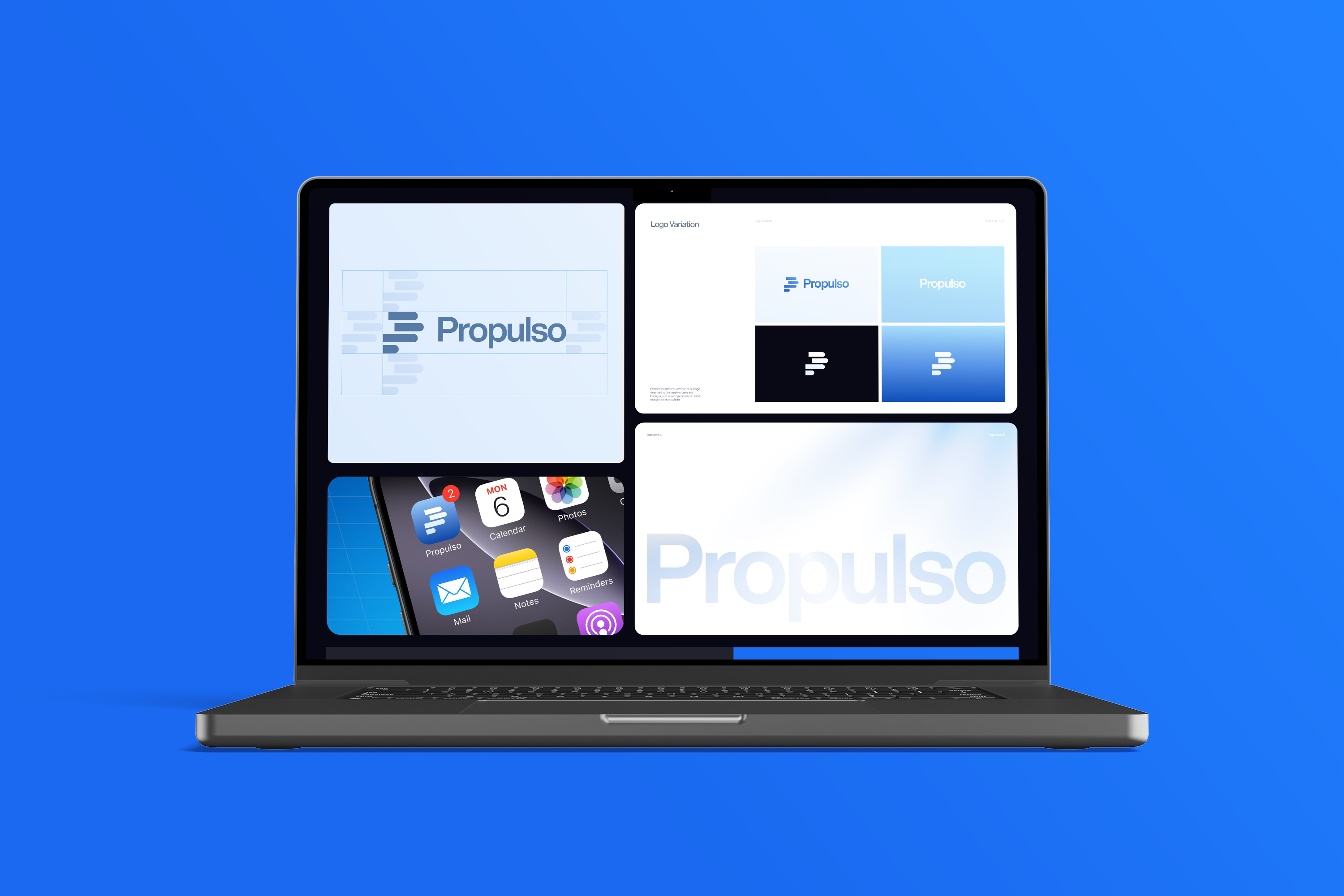
Example: Propulso, an AI voice-to-text SaaS product, needed to avoid looking like a generic transcription utility. Its brand identity uses a glowing orb, a deep navy palette, and confident typography, carried from the landing page directly into the product's recording screen, where the same orb reacts live as a user speaks. The identity was not designed first and handed to developers. It was designed after the core product flow was mapped, so the visual system matched what the product actually needed to communicate at each step, not just what looked good in isolation.
Why This Distinction Matters for a Startup
Getting brand identity and visual identity conflated costs a startup in 2 specific ways.
It leads to hiring the wrong type of partner. A founder who thinks they need "a logo" hires a freelance visual designer, when what the business actually needs is brand strategy work first, so the eventual visual identity has something solid to express. This is also why brand identity design cost varies so widely between providers: a $500 logo package and a $15,000 brand identity engagement are not competing for the same job.
It creates an inconsistent brand system that has to be redone. Visual branding decided in isolation, without brand strategy or a defined brand voice underneath it, tends to fall apart within a year, once the product evolves or the messaging shifts. Startups that skip straight to visual identity often end up paying for a second, more expensive round of brand identity work later- the round they should have done first.
A startup evaluating brand identity design services should ask any potential partner directly: does this engagement include brand strategy, or only the visual layer? The answer determines whether the resulting brand system will actually hold up as the product grows.
Final Thoughts
Brand identity, visual identity, and brand strategy are 3 different layers of the same system, not interchangeable terms. Brand strategy defines why a company exists. Brand identity is how that reasoning shows up everywhere the customer looks. Visual identity is the specific design layer inside brand identity that customers see first. For a SaaS startup, getting this order right- strategy first, then identity, then a visual system built to survive inside the product itself - prevents a costly rebuild later.
If you are evaluating partners for this work, see the best brand identity design agencies for startups in 2026 for a full, agency-by-agency comparison.
Does brand strategy need to come before visual identity?
Yes, brand strategy should come first. Strategy defines your positioning, target audience, and core message, the foundation that visual identity must communicate. Without strategic clarity, visual design lacks direction and purpose. Starting with visuals before strategy often leads to expensive rework when the design doesn't align with business goals.
Is a logo the same thing as a complete brand identity?
No, a logo is just one element within brand identity. Brand identity encompasses the entire system including strategic positioning, verbal expression, visual design elements, and experience principles. The logo is an important visual component, but brand identity extends far beyond that single mark.
How often should visual identity be updated compared to brand strategy?
Brand strategy changes rarely, typically every 5 to 10+ years when fundamental business direction shifts. Visual identity refreshes more frequently, usually every 1 to 3 years, to stay current while maintaining recognition. Brand identity as a whole evolves gradually every 3 to 5 years as your market position and personality mature.




.avif)