.svg)

.svg)
%201.svg)


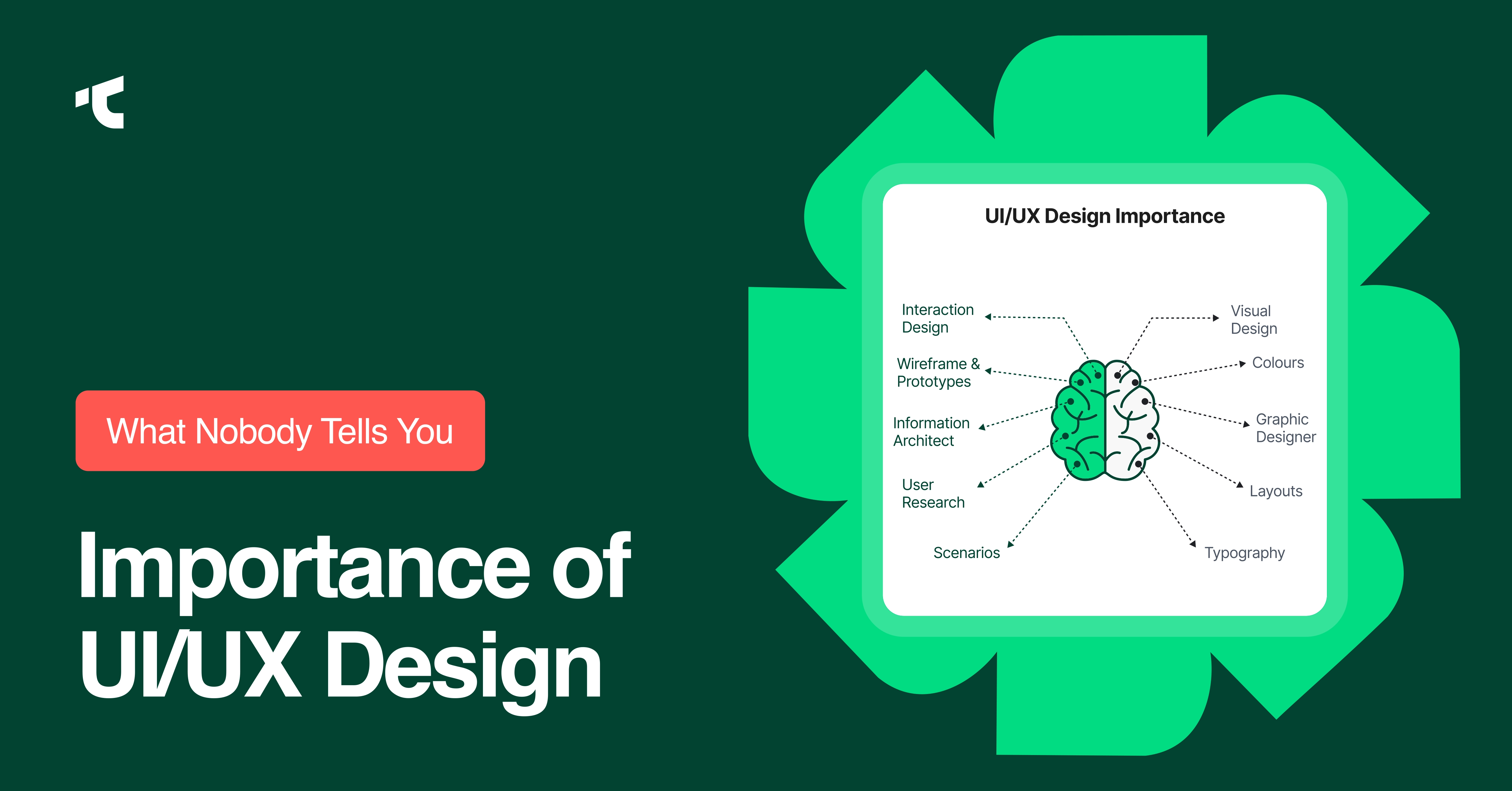

The importance of UI/UX design lies in its direct impact on user satisfaction, retention, and business growth. Good UI/UX design creates seamless, visually appealing digital products that keep users engaged. For SaaS products specifically, well-designed interfaces reduce churn, increase adoption, and drive long-term revenue.
There's a reason some digital products feel effortless to use while others leave users frustrated and clicking away. That reason is design, specifically, the importance of UI/UX design in shaping every interaction a user has with a product or service. From the layout of a dashboard to the flow of an onboarding sequence, UI and UX design decisions influence how users feel, what they do, and whether they come back.
For SaaS companies, this matters enormously. The SaaS market is crowded and competitive. Users have options, and switching costs are lower than ever. A clunky interface or confusing user journey isn't just a minor inconvenience; it's a business risk. According to Forrester Research, a well-designed user interface can raise conversion rates by up to 200%, while better UX design can yield conversion rate improvements of up to 400%.
This post unpacks why the importance of UI/UX design goes far beyond aesthetics. You'll learn how UI and UX work together, how design thinking drives product development, what principles lead to truly user-friendly interfaces, and how to measure whether your design work is actually delivering results.
Whether you're a product manager, a startup founder, or a UX designer looking to make the case for better design investment, this guide covers what you need to know.
The Fundamentals of UI/UX Design: What's the Difference?
Before exploring the importance of UI/UX design in depth, it helps to understand what each discipline actually involves, and why both matter.
What is User Experience Design?
User experience design, often called UX design, focuses on the overall experience a person has when interacting with a digital product. A UX designer thinks about the user journey from start to finish: How does someone discover the product? How do they complete a task? Where do they get confused? What makes them want to return?
UX design is rooted in empathy and research. It involves understanding end-user needs, mapping user flows, building prototypes, and testing assumptions. The goal is to make the overall user experience as seamless, intuitive, and satisfying as possible.
What is User Interface Design?
User interface design, or UI design, focuses on the visual and interactive layer of a digital product, the elements users actually see and touch. This includes buttons, icons, typography, color schemes, spacing, and layout. A UI designer ensures the interface is visually appealing, consistent, and aligned with brand identity.
While UX design is about how the product works, UI design is about how it looks and feels. Good user interface design translates UX decisions into a polished, accessible visual experience.
How UI and UX Work Together
The importance of UI/UX design becomes clearest when you understand how these two disciplines complement each other. A product with great UX but poor UI design might function logically but look unattractive or feel amateurish. A product with beautiful UI but poor UX might look impressive at first glance but leave users confused or frustrated.
Great digital products require both. UI and UX design work in tandem to create experiences that are functional, beautiful, and genuinely enjoyable to use.
Why UI/UX Design Is Important for SaaS Products
The importance of UI/UX design is felt across all digital industries, but it's especially acute in SaaS. Here's why.
How Good UI/UX Design Impacts User Satisfaction and Retention
SaaS products live and die by recurring revenue. If users don't find value quickly—or struggle to navigate the product, they churn. A good user experience reduces friction at every step, helping users reach their "aha moment" faster and building the habit of returning.
Studies consistently show that users form an opinion about a digital product within milliseconds of landing on it. That first impression is shaped entirely by UI design, the visual hierarchy, the clarity of the interface, and the sense that the product is professional and trustworthy. From there, UX design takes over, guiding users through tasks in a way that feels logical and rewarding.
Together, good UX design and good user interface design create a positive user experience that keeps users engaged long after onboarding ends.
The Business Impact: Churn, Adoption, and Customer Lifetime Value
The importance of UI/UX design isn't just a design conversation; it's a business one. Poor usability directly increases support costs, reduces adoption rates, and accelerates churn. IBM research has found that fixing a UX problem after development costs 100 times more than addressing it during the design process. That single statistic underscores why investing in design work early in product development is critical.
When SaaS companies get UI and UX design right, the results are tangible:
- Lower churn: Users who find the product easy to use are more likely to stay.
- Higher adoption: A user-friendly interface reduces the learning curve, encouraging teams to actually use the features they're paying for.
- Improved customer lifetime value: Satisfied users upgrade, renew, and refer others.
The importance of UI/UX design for SaaS products, then, is inseparable from the importance of revenue and growth.
How Well-Designed SaaS UI/UX Design Differentiates Products in Competitive Markets
When features and pricing are similar across competitors, design becomes a differentiator. A well-designed user interface signals quality and professionalism. A great user experience builds trust and loyalty. For SaaS companies targeting enterprise clients, a polished UI/UX design also signals that the product is ready for scale, something that matters enormously in procurement decisions.
The importance of UI/UX design in competitive positioning is increasingly recognized by top SaaS companies. Companies like Notion, Linear, and Figma have built cult followings in large part because of their exceptional design experience.
The User Research and Design Thinking Process
Understanding the importance of UI/UX design is one thing. Knowing how to execute it well is another. This is where design thinking and user research come in.
Why User Research is the Foundation of Good UX Design
Design thinking begins with empathy, understanding who your end users are, what they're trying to accomplish, and where current products or services are failing them. Conducting user research through interviews, surveys, usability testing, and behavioral analytics gives design teams the raw material they need to make informed decisions.
Without user research, design is guesswork. With it, design teams can prioritize the right problems and build solutions that genuinely improve the user experience.
How Design Thinking Drives Better Interface Design
Design thinking is a structured methodology for solving complex problems with the user at the center. It moves through five phases: empathize, define, ideate, prototype, and test. For UI and UX design, this process ensures that every design decision is grounded in real user needs rather than internal assumptions.
The importance of UI/UX design thinking lies in its iterative nature. Rather than building a complete product and testing it at the end, design thinking encourages rapid prototyping and continuous feedback loops. This approach catches usability issues early, before they become expensive development problems.
Prototyping and Iteration: How Designs Improve Over Time
A prototype is a testable representation of a design; it could be a rough paper sketch or a high-fidelity interactive mockup. Prototyping allows design teams to test ideas quickly, gather user feedback, and refine their approach before committing to development.
The importance of UI/UX design iteration can't be overstated. The best digital products aren't designed once; they're continuously improved based on real user feedback, changing needs, and new technical capabilities.
Key Design Principles for Creating User-Friendly Interfaces
Good design isn't arbitrary. It follows principles that have been validated through decades of research in human-computer interaction, cognitive psychology, and visual design. Here are the core principles that underpin great UI/UX design.
Visual Design Elements That Make a Good User Interface
A good user interface is built on strong visual design fundamentals:
- Hierarchy: Use size, color, and spacing to guide the user's eye to what matters most.
- Consistency: Repeating visual patterns across the interface reduces cognitive load and builds familiarity.
- Whitespace: Breathing room between elements makes content easier to scan and reduces visual clutter.
- Color and typography: These establish tone, brand identity, and readability.
The importance of UI/UX design in visual design is that these elements don't just make a product look good; they make it easier to use.
Interaction Design Principles That Enhance Usability and Accessibility
Interaction design focuses on how users engage with a digital product, the clicks, swipes, inputs, and responses that make up the interactive experience. Key principles include:
- Feedback: Every user action should produce a clear, immediate response (a button changes color, a form confirms submission).
- Affordance: Design elements should visually communicate how they're meant to be used.
- Accessibility: A well-designed UI must be usable by people with disabilities. This includes sufficient color contrast, keyboard navigability, and screen reader compatibility.
Accessibility is not optional; it's a core component of the importance of UI/UX design. Products that exclude users with disabilities aren't just ethically problematic; they're leaving revenue on the table.
How Design Principles Ensure Consistency Across Touchpoints
From mobile app to desktop browser to email notifications, users interact with SaaS products across multiple touchpoints. The importance of UI/UX design in ensuring a consistent design experience across all of these cannot be understated. Design systems, libraries of reusable components, patterns, and guidelines, help design teams maintain consistency at scale.
A consistent, well-designed UI builds trust. Users don't have to relearn how things work every time they encounter the product in a new context.
Measuring Success: User Satisfaction and Usability Metrics
Investing in design work is only worthwhile if you can measure its impact. The importance of UI/UX design extends to evaluation, knowing whether your design decisions are actually working.
How to Evaluate Whether Your UI and UX Design Is Achieving Its Goals
Key usability metrics include:
- Task success rate: The percentage of users who complete a given task without errors.
- Time on task: How long it takes users to complete a task. Shorter times typically indicate a more intuitive interface.
- Error rate: How often users make mistakes, and how easily they recover.
- System Usability Scale (SUS): A standardized questionnaire that produces a composite usability score.
Metrics for Assessing a Great User Experience
Beyond usability, measuring the overall user experience involves:
- Net Promoter Score (NPS): Measures how likely users are to recommend the product.
- Customer Satisfaction Score (CSAT): Captures immediate satisfaction after an interaction.
- Churn rate: A high churn rate often signals poor user experience design.
- Feature adoption rate: Low adoption of key features may indicate UX design problems.
How Continuous Improvement Enhances Overall Product Performance
The importance of UI/UX design is not a one-time investment. Design is an ongoing practice. Regular usability testing, analysis of user feedback, and data-driven iteration are what separate good digital products from great ones. Design teams that treat their work as a continuous process, rather than a project with a fixed end date, consistently produce better outcomes over time.
Why UI/UX Design Is Your Most Valuable Product Investment
The importance of UI/UX design is fundamentally about creating products and services that work for real people. Good design reduces friction. It builds trust. It makes users feel capable and valued. And in the SaaS market specifically, it's one of the most powerful levers a company has for reducing churn, increasing adoption, and driving sustainable growth.
Every dollar invested in the design process, in user research, design thinking, prototyping, and iteration, pays dividends in user satisfaction and business performance. The companies that understand the importance of UI/UX design early are the ones that build loyal user bases and enduring products.
If you haven't made UI/UX design a strategic priority in your product development process, now is the time. Audit your current user interface, invest in user research, build or refine your design system, and commit to measuring the experience you're delivering. Your users, and your bottom line, will thank you for it.
Frequently Asked Questions About the Importance of UI/UX Design
What is the difference between UI design and UX design?
UI design (user interface design) focuses on the visual and interactive elements of a digital product, such as buttons, colors, typography, and layout. UX design (user experience design) focuses on the overall journey a user takes when interacting with a product, including research, information architecture, and usability. Both disciplines are essential and work together to create great digital products.
Why is UI/UX design important for SaaS products specifically?
SaaS products rely on recurring subscriptions, making user retention critical. Good UI/UX design reduces churn by improving usability and user satisfaction, increases feature adoption, and helps products stand out in competitive markets. The importance of UI/UX design for SaaS is directly tied to long-term revenue and customer lifetime value.
How does design thinking improve the user experience?
Design thinking is a human-centered methodology that places end-user needs at the core of every design decision. By emphasizing empathy, rapid prototyping, and continuous iteration, design thinking helps teams identify and solve real usability problems before they reach production, resulting in more intuitive, user-friendly interfaces.
What metrics should I use to measure UI/UX design success?
Key metrics include task success rate, time on task, error rate, Net Promoter Score (NPS), customer satisfaction score (CSAT), churn rate, and feature adoption rate. Together, these metrics give design teams a clear picture of how well their UI and UX design is performing.
How much does poor UI/UX design cost a business?
IBM research found that fixing a UX problem after development costs 100 times more than addressing it during the design process. Poor usability also increases support costs, reduces adoption, and accelerates churn, all of which have significant financial implications. Investing in good design early in product development dramatically reduces these risks.
What are the most important design principles for creating a user-friendly interface?
Core design principles include visual hierarchy, consistency, accessibility, clear feedback on user actions, and appropriate use of whitespace. These principles ensure that a user interface is not only visually appealing but also intuitive, inclusive, and easy to use across all touchpoints.




.avif)