.svg)

.svg)
%201.svg)

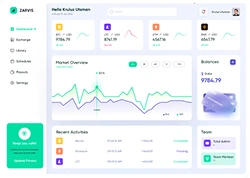


The global SaaS market, valued at over $317 billion in 2024, is entering a phase where design quality directly determines retention, activation, and revenue. B2B SaaS product design trends in 2026 reflect a single structural pressure: products are growing more complex while users are growing less patient. SaaS companies that invest in deliberate, systems-level design decisions are separating from those that still treat UX as surface polish.
This guide covers 9 B2B SaaS design trends shaping product development, UX strategy, and interface decisions across the SaaS market in 2026.
1. Flow-First Design Replaces Screen-by-Screen Optimization
Flow-first design is a B2B SaaS product design approach where teams build end-to-end user journeys before optimizing individual interface screens. SaaS teams using this method reduce cognitive overload by designing how context accumulates across a session rather than how each screen looks in isolation.
B2B SaaS teams are increasingly designing end-to-end flows instead of optimizing individual screens, shifting focus toward how decisions unfold over time and how context builds gradually, which reduces cognitive overload and makes products feel easier to use.
Flow-first design produces 3 measurable outcomes for enterprise SaaS products:
- Shorter time-to-activation,
- Lower support ticket volume, and
- Higher feature adoption rates among new users.
How to apply it: Map every decision point a user encounters from signup to first value. Identify where context breaks. Rebuild those transitions before redesigning any individual screen.
2. Progressive Disclosure Reduces Friction for Power Users and New Users Simultaneously
Progressive disclosure is a SaaS UI design pattern where advanced options, secondary actions, and edge-case features remain hidden until contextually relevant. B2B products are becoming more intentional about what they reveal and when, advanced options and edge cases are hidden until they are relevant, helping products serve both new users and power users without overwhelming either group.
The SaaS UX design challenge is serving 2 radically different user profiles: a first-week user learning the product and a power user who needs depth, from the same interface. Progressive disclosure solves this without building 2 separate interfaces.
SaaS tools like Notion, Linear, and Figma apply progressive disclosure by defaulting to simplified views and surfacing advanced configuration only when users trigger it through specific actions.
How to apply it: Audit your product for features that appear on screen regardless of user context. Move secondary actions into contextual menus, tooltips, or expandable panels.
3. Simplified Design Systems Built for Development Speed
SaaS design systems are being restructured around flexible, composable primitives rather than exhaustive component libraries. Teams are prioritizing flexible primitives that enable faster iteration; the goal is less governance and more momentum, especially as product teams grow.
A bloated design system creates 2 problems for SaaS product teams: slower development cycles and inconsistent component usage across features. Simplified design systems built around 20–30 core primitives resolve both problems. Tokens, spacing systems, and typography scales replace one-off components.
Enterprise SaaS companies, including Atlassian, Salesforce, and Shopify, have published open design systems built on this primitive-first model, demonstrating that consistency scales better through structure than through volume.
How to apply it: Identify the 20 components your product uses in 80% of interfaces. Document those as core primitives with clear usage rules. Archive the rest.
4. Guided Activation Replaces Empty Onboarding States
Activation-focused design is a SaaS product design trend where teams replace blank post-signup dashboards with structured entry points that guide users toward their first meaningful action. Products with structured onboarding see 50% higher retention, 35% fewer support tickets, and 75% of users churn in the first week due to poor onboarding.
The data confirms that B2B SaaS product design decisions made in the first 7 days of a user's experience determine long-term retention with greater reliability than any subsequent feature addition.
Guided activation design includes 3 components: a contextual welcome flow, a single required first action, and an immediate feedback signal confirming that the action produced a result.
How to apply it: Define the single action that represents your product's core value. Remove every interface element from the onboarding flow that does not direct users toward that action.
5. Interface Copy Becomes a Core SaaS Design Material
Product copy, button labels, empty state messages, error text, and inline guidance function as a SaaS UI design element that shapes user behavior at the moment of decision. Teams are treating language as a core design material that shapes understanding and behavior, with clear, contextual copy doing work that UI complexity used to compensate for.
Poor interface copy generates 3 measurable costs for SaaS companies: increased support tickets, lower feature adoption, and higher abandonment at friction points. SaaS tools that invest in copy as design consistently reduce these metrics without changing any visual element.
Copy-first design requires collaboration between product designers and content strategists during wireframing, not as a post-design editing step.
How to apply it: Audit your 10 highest-traffic interface screens. Identify every label, instruction, or error message. Rewrite each to describe the specific outcome the user will achieve, not the action they must perform.
6. AI-Native Interfaces Replace AI-Added Features
AI-native SaaS design integrates AI capabilities into the core user flow, where the AI anticipates context and surfaces suggestions without requiring explicit user commands. AI-added features append AI as a separate module or button within an existing interface designed without AI in mind.
By 2026, 80% of companies will deploy AI-enabled applications (Gartner), and those that embed AI natively will win user loyalty directly.
AI-native SaaS product design trends produce 4 user experience differences: reduced manual input, context-aware suggestions, proactive error prevention, and adaptive interface states based on user behavior history.
B2B SaaS tools, including HubSpot, Notion, and Intercom, distinguish themselves in the saas market by embedding AI into primary workflows, drafting, data analysis, and routing, rather than offering AI as a sidebar tool.
How to apply it: Identify the 3 most time-consuming manual steps in your core user flow. Assess whether AI can pre-populate, suggest, or automate each. Design the interface around the AI-assisted state as the default.
7. Usage-Based Pricing Models Reshape SaaS Interface Design
Usage-based pricing, a SaaS pricing model where users pay based on measured consumption rather than flat subscription tiers, requires SaaS product design teams to surface key metrics, usage data, and limit indicators within the primary interface.
Usage-based pricing models are among the key SaaS trends reshaping how SaaS companies build, deliver, and market their solutions in 2026.
SaaS UX design under usage-based pricing must accomplish 3 goals: make current usage visible without creating anxiety, signal approaching limits with enough lead time for users to act, and connect usage data to perceived value. SaaS tools that fail to design for these 3 goals see higher involuntary churn at billing threshold events.
How to apply it: Add a persistent, low-friction usage indicator to your primary navigation. Design 3 notification states, comfortable usage, approaching limit, and exceeded limit, each with a distinct next action.
8. Design Systems Enable Enterprise SaaS Accessibility at Scale
Enterprise SaaS products serving regulated industries, healthcare, finance, legal, and government, require design systems that meet WCAG 2.2 AA compliance standards across all interface components. Without governance, quality collapses, strong design operations become essential through component libraries, design tokens, and quality assurance processes with human review for critical assets.
Accessibility-first design systems in enterprise SaaS reduce 2 categories of risk: legal exposure from non-compliant interfaces and product exclusion from procurement processes that require accessibility certification.
WCAG 2.2 AA compliance requires 4 measurable interface standards: minimum 4.5:1 color contrast ratio for normal text, keyboard navigability for all interactive elements, descriptive alternative text for all non-decorative images, and visible focus indicators on all interactive components.
How to apply it: Run an automated WCAG audit using tools like Axe or Lighthouse across your 5 most-used product screens. Address contrast, focus, and label failures before adding new features.
9. Designers Operate at the Product Strategy Level
The B2B SaaS product designer role in 2026 extends upstream into problem definition, feature prioritization, and product strategy, beyond execution and interface delivery. Product designers are increasingly involved earlier in problem definition, not just execution, shifting design's role from polish to leverage, influencing what gets built as much as how it looks.
This shift produces a measurable change in how SaaS companies allocate design resources. Teams that involve product designers in discovery produce features with 40% higher adoption rates than teams that introduce design at the wireframing stage, according to research published by the Interaction Design Foundation.
Project management tools, CRM platforms, and data analytics SaaS products reflect this trend by building design leadership into their product development cycles from kickoff rather than treating design as a delivery function.
How to apply it: Include your lead designer in the first meeting of every new feature initiative. Give design teams access to user interview recordings, key metrics dashboards, and churn data, not just product requirements documents.
B2B SaaS Design Trends 2026: Summary Table
What Are B2B SaaS Design Trends in 2026?
B2B SaaS design trends in 2026 describe the structural, behavioral, and systemic shifts in how SaaS product teams design interfaces, user flows, design systems, and onboarding experiences. These trends prioritize user activation, reduced friction, and clarity at scale over visual novelty.
Final Takeaway
B2B SaaS product design trends in 2026 share a single direction: design systems, user flows, and interfaces must reduce friction and scale clarity as products grow. SaaS companies that treat design as a strategic function, not a delivery layer, consistently generate better activation rates, lower churn, and stronger enterprise SaaS adoption. The 9 trends above provide a verified, actionable framework for SaaS product teams building or redesigning products in 2026.




.avif)